
On September 23, an FDA advisory panel voted that the benefits of Grail's Galleri blood test outweigh its risks. The same panel asked that Grail's marketing avoid describing the test as an early detection tool. Galleri belongs to a category the industry calls multi-cancer early detection. Grail went into the room selling earlier diagnosis, and the panel's yes covers a narrower product than the one Grail has been selling.
What the panel voted for
All ten voting members called the test safe. On whether the benefits outweigh the risks the vote was seven to two, with one abstention, and on effectiveness it was six to four. The recommendation covers prescription screening for adults 50 and older, added to mammograms and colonoscopies. The panel also wanted the marketing materials to tell people to keep having those screenings.
The FDA's review of the NHS-Galleri study, reported by Targeted Oncology, found that the test caught 13.6% of stage I cancers and 60% of stage IV, so Galleri sees cancer best once it has spread. The panel noted those stage figures may carry some bias, but the trial's primary endpoint pointed the same way. The trial set out to cut the combined number of stage III and IV diagnoses, and it missed. Grail has since pointed to a drop in stage IV alone. Phil Castle, who runs the National Cancer Institute's cancer prevention division, told the panel the data were too preliminary to show any clinical benefit.
The word was the product
Cristian Tomasetti of City of Hope told NPR that an approval would validate the whole concept, and Grail did win something on Wednesday. But the panel approved the test and trimmed the claim, and for a screening product the claim is most of what the customer pays for. Nobody spends $949 on a blood draw for its specificity. They spend it on the hope of hearing about cancer while it can still be treated.
In a 510(k), the most expensive word is usually "better," because a superiority claim can push a device out of the equivalence pathway it was counting on. Galleri is going through premarket approval instead, and the same logic applies: every word in Grail's marketing is a claim that has to ride on evidence Grail already holds. Grail's evidence supports finding cancer, and the panel didn't think it yet supports finding it early.
Where the claim got decided
The panel's objection to "early" traces back to two choices Grail made when it designed its studies. Both large trials ran prospectively on an earlier investigational version of the assay, and the performance figures the panel saw came from retesting stored plasma with the current Galleri. That is a legitimate method, and it is also the kind of evidence an advisory panel, reading the file cold, tends to discount. The endpoint was the second choice. Tomasetti argued that three years was too short to show a stage shift. He may be right, but Grail picked the window.
For any company whose product is a measurement, the question I'd put on the table early is which sentence goes on the box, and whether the study about to be funded can carry that sentence on the version that will ship. A battery-health sensor that promises to flag a failing cell before it fails, or an inspection system sold on catching cracks before they spread, is selling a timing claim, and timing is the hardest thing to prove. Grail's stakes are higher because Congress has already approved Medicare coverage for multi-cancer tests the FDA approves, so whatever the label ends up saying will describe what Medicare pays for.
Dave's take
I'd still call this a good week for Grail, and a better one for Abbott and the other companies lining up behind it, who now know which word a panel won't accept on today's evidence. But founders spend years building the product and a few weeks writing the sentence that describes it, and the sentence is what gets approved.
From Dave’s video library
In this week's Failure Modes Friday, I walk through the Challenger booster seals that were burning on shuttle flights for years before the 1986 launch.
I’m here to help you scale.
Work With DavePrefer a smaller first step? Book a $500 one-hour working session →
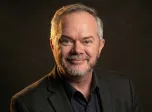
Dave Saunders is the founder of Base Reality Group and a Fractional CPO for product companies. He was a founder and operator at Galen Robotics, where the surgical-robotics platform earned FDA De Novo authorization in 2023, and he managed a 35-patent portfolio licensed from Johns Hopkins. He wrote Founders Who Finish and publishes The Build. More about Dave →