
Grail filed its premarket approval application for the Galleri blood test on January 29. On August 7 the company announced when it finds out what a room of outsiders makes of that file. September 23, in front of the FDA's Molecular and Clinical Genetics Panel of the Medical Devices Advisory Committee.
Nearly eight months from filing to that meeting, and the room that shapes the decision is staffed by experts who never took the pre-submission call and have no history with the company. Founders read that meeting as a formality on the way to a decision the agency already made. It is closer to the opposite. A panel is a cold second read of your evidence by people who were not in the room when you designed the study.
What a panel is asked to do
CDRH convenes outside experts to assess a device's safety and effectiveness, and they vote. The vote does not bind the agency. Maisel-Campbell and colleagues, writing in PLOS One in 2022, reviewed 49 device panel meetings across 11 panels held between January 2011 and June 2016, and found the majority vote went in favor of approval in 43 of them. Call it 88 percent. The base rate is friendly, which is why founders relax into it.
What the base rate hides is the subject of the argument. Panels spend their time on the fit between the evidence you brought and the claim you wrote. Those are two different objects, and the space between them is where a finished submission gets opened back up.
Your study population is a claim you already made
I learned this the expensive way at Galen. We ran a Q-sub before the study. We told the FDA we would do a 16-subject cadaver study, we would show that the difficult maneuvers got easier with the robot, and we would run it with residents. The FDA wrote back: sounds great, go for it.
Then we filed, and we got to substantive review. First question out of their mouths, on a Zoom call because it was still the COVID era: we noticed you did your study with residents. Are you planning on marketing to residents?
The thing they had approved in writing two months earlier was the thing they were now questioning. I went to Johns Hopkins with my hat in my hand, got free OR time and cadaver heads out of the neurosurgery department, recruited 16 attending surgeons, and re-ran the entire study in two weeks. One of them was a last-minute replacement, an otolaryngologist who does balloons and tonsils and will never do microsurgery in her career. She nailed the washout tests. That one data point turned out to be the strongest evidence we had that the device did what we said it did.
We got there. Nobody should plan on getting there. A pre-sub answer is one reviewer's read on one day, and it does not bind the team that reviews your submission later. The population you tested in is a statement about who you intend to sell to, and a reviewer who never met you will read it that way.
What Grail brought to the room
Look at what Grail assembled and you can see a company that settled the population question early. The application rests on 25,490 consented participants from PATHFINDER 2 with a year of follow-up, plus more than 70,000 people from the intervention arm of the prevalent screening round of the NHS-Galleri trial. Asymptomatic adults, tested in the setting where the product would be used. Galleri has been on the market as a lab-developed test for years, past 475,000 commercial tests as of January, so the company had every reason to lean on its existing customer base. It ran the prospective screening studies anyway.
Then read the intended use. The test is meant to be used "in addition to, and not as a replacement for, guideline-recommended screenings." That sentence is a fence. It tells a room of geneticists and pathologists what Grail is not claiming, before anyone in the room has to ask.
Founders with a submission in motion treat each FDA yes as a deposit that accumulates. It doesn't. Every round is staffed by different people with a different mandate, and the only thing that carries forward is the evidence itself. Build the file for a reviewer who reads it cold, in a room you are not in, with no memory of anything anyone told you. If the file only makes sense with your explanation attached to it, you have not finished it.
From Dave’s video library
I take apart a widely cited study where the system under test helped grade its own results, and what to check before you trust a number like that.
I’m here to help you scale.
Work With DavePrefer a smaller first step? Book a $500 one-hour working session →
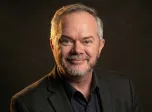
Dave Saunders is the founder of Base Reality Group and a Fractional CPO for product companies. He was a founder and operator at Galen Robotics, where the surgical-robotics platform earned FDA De Novo authorization in 2023, and he managed a 35-patent portfolio licensed from Johns Hopkins. He wrote Founders Who Finish and publishes The Build. More about Dave →