
LigaSure has sealed vessels in more than 45 million procedures across 65 countries. In June, Medtronic filed a 510(k) asking the FDA for permission to put it on the end of a robot arm. The clearance came through on September 16.
The sealing technology is the same one surgeons have used for two decades. What's new is its position, and position is what the FDA clears. A clearance covers one configuration doing one job, which turns a platform company's roadmap into a queue of submissions that somebody has to put in order.
Cleared for one combination
The cleared instrument is the LigaSure RAS Maryland, and it runs only on the Valleylab FT10 generator attached to Medtronic's Hugo robot. Three pieces went into the file, and the clearance describes the combination. That jaw seals a seven-millimeter vessel in about two seconds, on the Hugo arm, through the FT10. The 45 million procedures behind LigaSure carry weight in that file. A predicate history tells the reviewer the sealing physics is understood, and says nothing about how the jaw behaves when a robot arm is holding it. The robot arm is what the June file had to cover, and a European file had covered it a year earlier.
The CE mark came in July 2025, and the instrument launched across Europe that year, so surgeons outside the United States had the robotic sealer for more than a year before American surgeons could touch it. The evidence was the same in both places, and so was the hardware. What differed was which regulator was reading, and what each one had already let Hugo do.
How much of a hospital Hugo is allowed into
Hugo has been cleared in the United States since December 2025 for urologic procedures and nothing else. Last year American surgeons ran about 201,000 urologic procedures on da Vinci robots, against 1.25 million in general surgery and 468,000 in gynecology, so the clearance opened the smallest of the three doors. A urology-only robot is a real product and a narrow one. Every hospital conversation starts from a single service line. The economic case has to close on that line's volume, and the general surgeons who would fill the room are watching a machine they can't use yet.
Medtronic filed 510(k)s for general surgery and gynecology in late April, and five months later the company is still waiting on both. The vessel sealer went in two months after those filings and cleared in three.
What a founder gets to decide
A company chooses two things in that queue: which file goes in first, and how the product is defined when it does. The review clock and the order the answers come back in belong to the agency.
Framing decides what evidence the agency asks for. Define a device around a patient outcome and you've invited a clinical trial. Define the same hardware around what it does for a surgeon's hands and you've invited an engineering and usability file, which is cheaper and more in your control. That decision belongs to whoever owns the product, not to the regulatory consultant implementing against it.
Clearance queues are the medtech version of something every platform business runs into. You sell one configuration, then find a gate between the platform working and the customer finishing a whole job on it. Sometimes the gate is a certification. Sometimes it's an integration, a driver, a security review, or a procurement category nobody has written yet. When I sequence a roadmap I keep coming back to one question: which configuration lets a single customer finish a single job end to end. Then I check whether that's the file that went in first, or whether the easy one went instead.
Dave's take
I read the Hugo queue as a product roadmap that happens to be written on FDA letterhead. Somebody chose which indication to chase first and which market got the sealer a year early, and both were commercial calls before they were regulatory ones. If you're building a platform and your regulatory consultant is choosing that order, you've put the wrong person in the seat.
From Dave’s video library
Dave traces the most-repeated statistic about AI pilots back to the report it came from, and finds a document that says something narrower than the headline.
I’m here to help you scale.
Work With DavePrefer a smaller first step? Book a $500 one-hour working session →
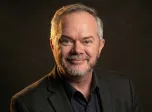
Dave Saunders is the founder of Base Reality Group and a Fractional CPO for product companies. He was a founder and operator at Galen Robotics, where the surgical-robotics platform earned FDA De Novo authorization in 2023, and he managed a 35-patent portfolio licensed from Johns Hopkins. He wrote Founders Who Finish and publishes The Build. More about Dave →