
The day after the FDA approved Edwards' Sapien 3 valves for severe aortic stenosis in patients who had no symptoms, a cardiologist could offer one of those patients a new valve. What that cardiologist couldn't do was bill Medicare for it.
That approval came on May 1, 2025. Medicare finalized coverage for the same patients on September 11 of this year. The device didn't change in between, and neither did the label or the trial behind it.
Two agencies, two questions
The FDA wanted to know whether replacing the valve early was safe and effective in people who felt fine. EARLY TAVR answered it: 901 patients randomized between early replacement and the standard practice of watchful waiting. Over nearly four years the replacement arm cut the risk of a composite of death, stroke, and unplanned cardiovascular hospitalization by half, a hazard ratio of 0.50. By the two-year mark, more than 70 percent of the watchful-waiting patients had received a valve anyway, once their symptoms arrived.
A different agency decides what Medicare pays for. The Centers for Medicare and Medicaid Services, CMS, asks whether a service is reasonable and necessary for Medicare beneficiaries, which isn't the FDA's question. Its reviewers read the same trial, on their own schedule, and acted on it this September.
The coverage arrived with an obligation attached
That September determination dropped the coverage-with-evidence-development requirement for symptomatic patients, a condition that had made continued data collection part of getting paid. It kept that same requirement for the asymptomatic patients it had just added, calling the evidence there promising but incomplete.
So the new indication carries a registry with it, and what that costs depends on who is carrying it. TAVR is roughly 75 percent of Edwards' revenue, and Stifel analysts value the global market above $7 billion, so the data collection is a line item against a business the decision just widened. At Medtronic, TAVR is 5.5 percent of revenue and the decision barely moves the quarter. A startup with one product doesn't get either position. Its data collection comes out of its launch budget, in its launch year.
The calendar was public the whole time
CMS opened the proposal on June 15, held a thirty-day comment window that closed July 15, and finalized in September. The proposal also took out facility-level volume thresholds, replacing them with expectations about infrastructure and quality improvement. It cut the heart-team workup to a single in-person evaluation by a TAVR operator, with a second evaluation optional and allowed by telehealth or chart review.
Those are workflow changes, and they decide where the procedure can happen. A hospital that could never clear the old volume threshold can now stand up a program, and a patient who would have traveled to a high-volume center can be treated closer to home. That growth comes from the volume rule coming out, not from the label.
The label was never what stood between Edwards and those patients. A coverage decision stood there, and behind it a volume rule, and MedTech is just where that gap is easiest to see. The authority that lets you sell is rarely the authority that decides whether anyone can buy. In enterprise software it's the security review and the procurement desk, holding the line months after the contract is technically signable. In grid hardware it's the interconnection queue, plus the separate question of whether a project qualifies for the credit. In defense it's the program of record. None of those bodies is bound by the approval you already hold. Most founders I work with bring me a clearance plan with dates on it and a reimbursement plan that is one sentence in a deck.
Dave's take
In my experience an approval binds the agency that issued it and nobody else. Edwards paid for the trial that changed Medicare's mind and still waited sixteen months for the decision that turned approval into revenue. Put the second gate on the roadmap with real dates against it, because the runway you raised against the first one is the runway you'll be spending while you wait.
From Dave’s video library
Dave walks through how to tell real demand from encouragement, and which signals hold up when you test them.
I’m here to help you scale.
Work With DavePrefer a smaller first step? Book a $500 one-hour working session →
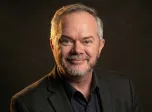
Dave Saunders is the founder of Base Reality Group and a Fractional CPO for product companies. He was a founder and operator at Galen Robotics, where the surgical-robotics platform earned FDA De Novo authorization in 2023, and he managed a 35-patent portfolio licensed from Johns Hopkins. He wrote Founders Who Finish and publishes The Build. More about Dave →