
Stryker's new surgical headset does not replace the monitors in the operating room. Its own label says it can't. The FDA authorized SportSuite Vision on July 17 through the De Novo pathway. The indication that came with it requires the images a surgeon sees through an Apple Vision Pro to be used alongside the traditional monitors the rest of the room is watching. Stryker printed that requirement itself, at the foot of its own press release, and it's the reason the authorization exists.
That release went out on September 1. Stryker said Chad Mather III, an orthopedic surgeon at Duke Health and a disclosed Stryker consultant, had completed the first hip arthroscopy using the system. He said it let him place the clinical information where he wanted it and reach it inside the sterile field: arthroscopic video, CT imaging, and Stryker's HipCheck and HipMap software in one view instead of on monitors scattered around the room.
The indication covers two procedures. SportSuite Vision is authorized for the intraoperative display of arthroscopic video and medical imaging during femoroacetabular impingement and labral repair hip arthroscopy. That's the whole envelope. Not shoulders, not knees, and nothing that steers an instrument. A company with Stryker's balance sheet could have asked for much more.
What a narrow indication buys
I've argued for a while that a De Novo signal isn't the punishment founders take it for. If the agency thought you were high risk, you'd already be headed for a PMA. Routing you to De Novo means they think you sit inside a risk envelope they're willing to write a new regulation around. The catch is that most De Novo submissions don't land. Former FDA examiners have told me that roughly half of them arrive effectively dead, and that figure is what I was told rather than anything the agency publishes. The ones that go through are the ones that asked for a clearance they could get.
So you trade scope. You give up claims you wanted on the first pass and you keep the ones your evidence already supports. Stryker was asking for a display class with no predicate anywhere. It was also putting a consumer headset inside a sterile field. Asking for every arthroscopic procedure in the catalog on top of that would have opened a much bigger evidence question about what happens when a surgeon's only view of the field runs through a video feed. Writing the monitors into the indication takes that question off the table.
Being the predicate
The payoff sits on the other side. A De Novo does more than authorize a device. It creates a regulation in the Code of Federal Regulations describing a class that didn't exist before, and everyone who follows has to be substantially equivalent to what that regulation says.
I've been on the inside of that. In the last stretch of our De Novo at Galen, the FDA asked what we would like the new regulation to say. We conferred, wrote a paragraph, and sent it as a PDF. A few hours later they asked for it in Word. A day or two after that the clearance arrived, and the regulation describing our device was word for word what we had sent. Anyone entering that category has to match language my team wrote, and when we wanted to add a feature our own predicate was that same regulation.
Stryker now holds the reference point for a surgeon-worn augmented reality display in the operating room. The next company that wants a headset in an OR has a path, and the path runs through a regulation built around Stryker's device and bounded by conditions Stryker chose to accept. When Stryker wants shoulders and knees, it files a 510(k) against its own device.
The framing is the regulatory strategy
All of that follows from one sentence: what the device is, stated so a regulator reads it as moderate risk. That sentence sets the scope you are allowed to ask for, which makes it a product decision, and founders keep handing it to the regulatory consultant. We learned that at Galen the expensive way. We framed the robot as a remote-control telemanipulator and put da Vinci up as the predicate. The FDA rejected the comparison, saying those predicates weren't appropriate for the device as we had described it. Framed instead as a stabilizer that improves a surgeon's access to anatomy at the end of a long instrument, the same machine went through as a De Novo, with no change to the hardware.
The framing decides what evidence you owe. A claim about patient outcomes buys you a clinical trial. A claim about where information sits in a surgeon's visual field buys you engineering and usability testing. Those are two different companies with two different burn rates.
When I read a first clearance now, the first thing I look for is what the company gave up. Stryker's list is long and specific, which tells me someone with authority over the product was in the room the day that indication got written. At most companies I walk into, nobody was.
From Dave’s video library
Dave reads Duolingo's own filings against the headlines about its AI-first announcement, and shows what the documents commit the company to.
I’m here to help you scale.
Work With DavePrefer a smaller first step? Book a $500 one-hour working session →
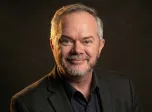
Dave Saunders is the founder of Base Reality Group and a Fractional CPO for product companies. He was a founder and operator at Galen Robotics, where the surgical-robotics platform earned FDA De Novo authorization in 2023, and he managed a 35-patent portfolio licensed from Johns Hopkins. He wrote Founders Who Finish and publishes The Build. More about Dave →