
Medtronic committed about $700 million this month to a surgical robot it didn't build and can't sell in the United States. The money buys distribution rights to Sentire, a multi-port system from Cornerstone Robotics in Hong Kong, in select markets outside the US where the machine already carries approval. The obvious question was whether that signals thin confidence in Hugo, Medtronic's own robot. Chief executive Geoff Martha told MedTech Dive it was the opposite.
He's right, though the reason has little to do with Hugo. Matt Anderson, who runs Medtronic's surgical business, framed the two-platform decision around the "varying needs and preferences" of surgeons, health systems and markets. Cornerstone built the whole Sentire system in-house, including an immersive console and a dual-console setup. It won its CE mark in May for general, gynecologic, thoracic and urologic procedures, and it holds approvals in China and Singapore.
Medtronic wasn't short a robot
Hugo is in more than 35 countries across six continents, with roughly 250 systems installed. Medtronic expects it to pass 50,000 procedures globally by the end of its fiscal year, and procedure volume is growing at more than twice the rate of the robotic surgery market. The FDA cleared Hugo for urologic surgery inside the past year, which made Medtronic the first large device company to put a soft-tissue robot against Intuitive's da Vinci in the US. Filings for general surgery and gynecology are in, and Johnson & Johnson got its Ottava authorization in July. Nobody in that group is short a platform, which is why the $700 million didn't buy a machine. It bought rooms.
Single-digit penetration is the whole business
Global penetration of robotic-assisted surgery still sits in the single digits. In emerging markets it runs around one percent.
Those two numbers are the argument I've been making from a stage for years, and they have nothing to do with whether the robot is better. Manual laparoscopic nerve-sparing prostatectomy is one of the hardest operations in surgery, and the number of surgeons who can do it consistently by hand is in the dozens. The da Vinci grew that population by orders of magnitude. More surgeons, more patients. The comparison that matters is robot against open surgery, because that's what most of those patients get otherwise.
Ninety-nine percent of a market is a price, workflow and training gap long before it's a technology gap. A flagship platform tuned for a large American academic center reaches a thin slice of that. Two platforms, approved in different jurisdictions and priced for different buyers, reach more of it. Medtronic can push both through a distribution organization it already pays for.
What made Sentire buyable
Cornerstone arrived at this deal with a CE mark, a China approval and a Singapore approval in hand. Those clearances turned an engineering program into something a strategic partner could start shipping on Monday. Without them, the same console is a demo, and demos are cheap in this category.
Approvals are the part hard-tech founders keep underweighting. If you're building a platform against an entrenched incumbent, the useful question is which segment the incumbent's machine structurally doesn't fit, and whether you can clear a regulator there before anyone else does. Form factor and price follow the task, which is why a company with a working robot paid $700 million for access to a second one.
Cornerstone made the decision that mattered years before anyone sat at a deal table, when it picked which regulators to clear and in what order. I watch founders treat the regulatory pathway as a cost line and the product architecture as the strategy. They're the same decision.
From Dave’s video library
Dave on what happens when every sale still runs through the founder, and the point where that stops being a growth plan.
I’m here to help you scale.
Work With DavePrefer a smaller first step? Book a $500 one-hour working session →
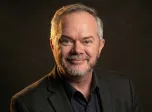
Dave Saunders is the founder of Base Reality Group and a Fractional CPO for product companies. He was a founder and operator at Galen Robotics, where the surgical-robotics platform earned FDA De Novo authorization in 2023, and he managed a 35-patent portfolio licensed from Johns Hopkins. He wrote Founders Who Finish and publishes The Build. More about Dave →