
Johnson & Johnson paid $400 million in November 2023 for a heart implant that had never been through a pivotal trial. The trial started in February 2024. By the middle of 2025 it was suspended, because the implant was unwrapping inside the heart and blood was leaking past it. Last week the people who designed it bought it back.
The buyer is Jaguar LAA, a new company in Santa Rosa, California, formed by Santé Ventures with members of the Laminar management team. The deal was announced on September 11, 2026, and the terms were not disclosed. J&J called the sale a disciplined approach to portfolio management, and by its own standards that is accurate. What the phrase cannot do is separate a device that does not work from a device on its first design cycle.
What the trial found
The Laminar device closes the left atrial appendage by rotating it shut. That geometry leaves little hardware exposed in the left atrium afterward, which is what made the program worth $400 million next to Boston Scientific's Watchman and Abbott's Amulet. Then it relaxed after implant, and the seal leaked. A rotational closure that loosens is a fixable class of problem: it could be the materials, the retention features, the delivery technique, or some combination, and finding out which takes another design cycle and another trial.
An investigational device exemption study exists to surface exactly this, and NCT06168942 surfaced it about a year and a half in. The trial did not show the device was unfixable. It showed the fix would cost more than J&J wanted to spend, and J&J had a portfolio review to run that number through.
Who can fund the second design cycle
Laminar arrived inside J&J MedTech by acquisition. Nothing else J&J was already shipping depended on it going forward, and it shared no platform and no sales channel with an approved product, so at review time it defended itself on its own numbers alone. Those numbers in the summer of 2025 were a suspended trial, an unproven fix, a fresh IDE, and two approved competitors already selling. Funding the next design cycle meant taking money from products J&J ships today and handing it to a device that would reach the market years from now, if the second design worked. Every quarter Laminar sat there, the certainty got surer and the maybe got a year older.
Jaguar runs different math on one program. The engineers who watched the device come unwrapped are the ones being paid to fix it, and that work is not competing for money against anything else the company sells, because the company sells nothing else. Jaguar says it will build on the clinical work already done and carry the device through development and regulatory review.
Getting that work funded took a new company and an outside raise against their own program. A founder selling to a strategic before the pivotal trial reads out is on the other side of that same transaction, handing the next design cycle to a capital process that has no particular reason to fund it. Before signing, find out who inside the acquirer owns the program when the first trial surprises everyone, and what else their budget has to cover.
Dave's take
Santé Ventures and a handful of the original team just paid for the right to finish something a $400 million buyer decided not to finish, and they got the better end of it. Trial data, a named failure mode, and the engineers who know why it happened are worth more in one room where fixing it is the only job than they were worth inside a portfolio with somewhere else to put the money.
From Dave’s video library
Dave works through what happens to each idea when a company splits its attention across several at once.
I’m here to help you scale.
Work With DavePrefer a smaller first step? Book a $500 one-hour working session →
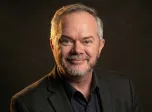
Dave Saunders is the founder of Base Reality Group and a Fractional CPO for product companies. He was a founder and operator at Galen Robotics, where the surgical-robotics platform earned FDA De Novo authorization in 2023, and he managed a 35-patent portfolio licensed from Johns Hopkins. He wrote Founders Who Finish and publishes The Build. More about Dave →