
Bristol Myers Squibb finished its evaluation and decided the machine could not build its product. That ended a $380 million capacity reservation and supply agreement signed with Cellares in 2024, under which the automated Cell Shuttle system was to make Breyanzi, Bristol Myers Squibb's approved CAR-T cell therapy. Cellares strongly disagrees with the characterization. Its Cell Shuttle, the company says, has already made GMP drug product in an FDA-regulated clinical program. The doses met every release specification, shipped on time, and went into patients.
Both statements can be true at the same time. They describe two different tests.
Clinical release and commercial qualification ask different questions
A clinical batch has to conform. The process runs, the doses get tested against release specifications, and the ones that pass go to patients. That is a real bar, and on the public record the Cell Shuttle cleared it.
Commercial qualification asks a longer question. Can the process hold that result at volume, at yield, and at a deviation rate the quality system can absorb? Can it hold through operator turnover, equipment changeover, and a second site, for as long as the therapy stays on the market? The word doing all the work in Bristol Myers Squibb's statement is commercial, and in a supply agreement the buyer defines that word. A machine that makes conforming doses one batch at a time in a clinical program has answered the first question and said nothing about the second.
That distance between a conforming batch and a qualified process is the prototype-to-product gap, and it does not care that both parties are already running a GMP operation. Passing every release spec starts the conversation about commercial supply. It does not finish it, and the two bars get confused constantly because the paperwork looks similar from the outside.
What a capacity reservation actually buys
Confusing the two bars is expensive. About 100 positions at Cellares end on October 20, most of them in New Jersey, and the cuts hit software engineers, quality control and design staff, and manufacturing specialists. The company closed a $327 million Series D roughly two months before it announced those cuts, and says it has more than doubled the number of customers it serves since the start of the year.
A $380 million capacity reservation is a customer buying the right to a supplier's factory, and the customer decides whether to use it. Money is runway, not a purchase order, and a $327 million round does not qualify a machine. A bigger anchor customer puts more of a supplier's build plan and headcount behind one company's qualification decision, and that exposure peaks on the day the agreement is signed.
The requirements document you did not write
This exposure is not particular to cell therapy. Any company selling a machine into somebody else's production line carries it. An industrial robot cell can pass a factory acceptance test at the integrator's shop and then fail a run-at-rate trial on the customer's floor, because the acceptance test measures what the integrator agreed to build, while the floor measures what the line actually demands.
On any platform play, the question I keep returning to is whose document actually specifies the product. If a customer's quality organization writes the criteria that decide whether your machine is qualified, those criteria are your requirements, whether or not you have read them. Getting them on paper before the design is locked is a different project from getting them afterward. Only the first one can change the machine.
Dave's take
I don't know which company is right about the Cell Shuttle, and I am not sure the answer would help anyone. What I would want, sitting on either side of that agreement, is the qualification criteria written down and signed while the machine is still a drawing. Suppliers who wait for the customer's evaluation to tell them what commercial means find out at the worst possible moment, with the factory built and the headcount already hired.
From Dave’s video library
Dave walks through the five questions that surface why a customer actually left, and why the reason they hand you is rarely the whole one.
I’m here to help you scale.
Work With DavePrefer a smaller first step? Book a $500 one-hour working session →
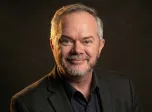
Dave Saunders is the founder of Base Reality Group and a Fractional CPO for product companies. He was a founder and operator at Galen Robotics, where the surgical-robotics platform earned FDA De Novo authorization in 2023, and he managed a 35-patent portfolio licensed from Johns Hopkins. He wrote Founders Who Finish and publishes The Build. More about Dave →