
In April 2011, Johnson & Johnson's chief executive Bill Weldon explained why he was paying $21.3 billion for a Swiss implant maker called Synthes. Orthopedics, he said, was "a large and growing $37 billion global market." He called it a growth driver for the company. Last Friday, Bloomberg reported that Apollo Global Management is in talks to take that business off J&J's hands for something close to $20 billion.
The market did not shrink. When J&J announced last October that it intended to separate orthopedics, the company described the category as a $50 billion-plus global market serving about seven million patients a year. By J&J's own accounting in both documents, the market grew by more than a third. The business J&J built inside it is now being discussed at less than the price of Synthes alone.
What fifteen years did to the price
J&J paid $21.3 billion for Synthes in 2011, or $19.3 billion after Synthes' cash. It merged the company with the DePuy orthopedics business it already owned. Apollo is discussing something close to $20 billion for the result. Revenue was $9.2 billion in fiscal 2024 and $9.3 billion in 2025.
Weldon's case in 2011 rested on more than the market number. He pointed to aging populations, rising obesity, and demand from emerging markets, and the demand has behaved the way he said it would. Fifteen years of it produced a business J&J now calls low growth and a buyer prices below what Synthes alone cost.
First-quarter orthopedics sales this year came in at $2.38 billion, up 6.3 percent from a year earlier. DePuy Synthes is the largest orthopedics company in the world and it will stay that way whoever ends up owning it. J&J is also still weighing a spinoff, which its finance chief has called the primary path. The Apollo talks may end without a deal. What neither path changes is the number the business now carries.
The market never changed its mind
That number is a verdict on a growth rate, and J&J has delivered that verdict twice in fifteen years, in opposite directions. In 2011 the size and growth of orthopedics were the reason to buy in. In October 2025 Tim Schmid, who runs J&J's medtech business, called orthopedics a lower-growth market and described the separation as shrinking in order to grow faster. Joaquin Duato was specific about where the money goes instead: cardiovascular and robotics.
The market got bigger the whole time.
J&J published both halves of its own answer in the same quarter. Cardiovascular grew 12.6 percent in the third quarter of 2025. Orthopedics grew 3.8 percent in that quarter and slipped slightly across the first nine months. Both of those growth rates live inside the same $50 billion market figure.
That gap is where the $20 billion comes from. Growth follows the purchases that are changing, and in orthopedics the purchase has not changed much. A hip implant is bought today the way it was bought a decade ago, by a value analysis committee weighing it against the implant already on the shelf. Cardiovascular and robotics are bought by people whose procedures are still in motion, which is why J&J is keeping them. If you are building implants, disposables, or any other high-volume product in a settled category, the growth in your market slide is going somewhere, and you should be able to say where.
Dave's take
Revenue, costs, runway. Everything else is decoration, and market size is the most expensive decoration on the wall, because it looks like an argument. J&J bought that argument in 2011 for $21.3 billion. None of this makes DePuy Synthes a bad business. It makes it a business that does not belong in a portfolio being rebuilt around growth rate, and J&J said so in writing last October.
From Dave’s video library
Dave covers what the word unicorn actually means, and why growth rate became the only measure anyone applies to a business.
I’m here to help you scale.
Work With DavePrefer a smaller first step? Book a $500 one-hour working session →
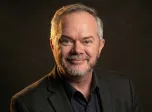
Dave Saunders is the founder of Base Reality Group and a Fractional CPO for product companies. He was a founder and operator at Galen Robotics, where the surgical-robotics platform earned FDA De Novo authorization in 2023, and he managed a 35-patent portfolio licensed from Johns Hopkins. He wrote Founders Who Finish and publishes The Build. More about Dave →