
Axogen agreed on Thursday to pay $200 million in cash for BioCircuit Technologies, a private company in Atlanta. BioCircuit's one commercial product joins a severed nerve without stitches. Axogen already sells grafts and connectors into that operation. What it just bought is a repair that does not require a surgeon trained in microsuture.
The device is NerveTape. The two companies call it the first FDA-cleared sutureless device for repairing transected nerves, and the announcement states the commercial point plainly: cutting the dependency on microsurgical skills puts nerve repair in reach of more surgeons and more care settings.
The market read Thursday as a financing event. Axogen's stock fell more than 10% to $42.46 while the company priced a concurrent public offering of about $208.7 million, close to the entire purchase price. Truist Securities said the rationale makes sense and flagged the dilution from the equity raise as a point of contention for investors.
What $200 million is buying
Axogen's catalog runs on microsurgeons. Avance, the Axoguard connectors and protectors, the nerve cap: every one of them goes into an operation performed by someone trained to work under magnification. The number of nerves severed in a year is not what caps that business. The number of surgeons who can repair one is. NerveTape changes the second number.
I have been making a version of this argument about surgical robots for years, usually into a room that wants to debate whether robot-assisted surgeons get better outcomes than the small group who can do the operation by hand. That comparison flatters a few dozen experts and ignores every patient who would otherwise have gotten open surgery. Manual laparoscopic nerve-sparing prostatectomy is one of the hardest operations in medicine, and the number of surgeons who can do it consistently by hand runs to the dozens, with no exact count published anywhere. The da Vinci put that operation in reach of thousands. More surgeons means more patients get offered the option. Until Thursday I had not seen anyone put a dollar figure on the same argument in nerve repair.
Michael Dale, Axogen's chief executive, said the deal moves nerve repair toward being an expected standard of care. That is a market-size claim in the language of a mission statement. A procedure becomes standard when enough people can perform it, and Axogen already owns the harder half of the distribution problem: the surgeon relationships and hospital contracts it built selling grafts. The device arrives in a channel that is already there.
The clause that says what Axogen would not buy
Axogen was specific about what it is not taking. The deal does not close until BioCircuit spins out its electronics research and development business. BioCircuit describes its own expertise as biomaterials, precision nitinol design and manufacturing, and bioelectronics. Axogen is taking the first two.
The spin-out is a product boundary, drawn by the buyer, in a contract. The cleared mechanical device has a market Axogen can name and a sales organization it already pays for, which is what makes it worth $200 million in cash at closing. The bioelectronics program has a research plan and a new owner.
Who has to be in the room
Nerves are incidental if you build work cells or diagnostics or anything else that needs a specialist present. Every hard-tech product has someone who has to be in the room for it to work, and how many of those people exist is the size of your market. A cell that only one integrator can commission sells at the speed of that integrator's calendar. An assay that needs a trained technician goes to the sites that already have one. Neither of those constraints appears anywhere on a bill of materials, so neither one gets engineered.
Axogen bought the right to sell nerve repair to surgeons who were never going to learn microsuture, and funded it almost entirely with new stock. When only a specialist can operate your product, that specialist is your ceiling, and more engineering on the device will not lift it. The cheapest question I know to put to a roadmap is which requirement on the user we could delete.
From Dave’s video library
Dave covers how to find out which part of the product decides whether anyone can buy it, before you spend months on the wrong part.
I’m here to help you scale.
Work With DavePrefer a smaller first step? Book a $500 one-hour working session →
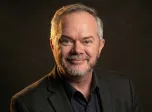
Dave Saunders is the founder of Base Reality Group and a Fractional CPO for product companies. He was a founder and operator at Galen Robotics, where the surgical-robotics platform earned FDA De Novo authorization in 2023, and he managed a 35-patent portfolio licensed from Johns Hopkins. He wrote Founders Who Finish and publishes The Build. More about Dave →