
Kardium's cleanroom in Vancouver can build 500 Globe catheters a year. The company is spending $125 million to make that number 30,000. The distance between those two figures decides whether Kardium competes in pulsed field ablation, and the FDA approval it won twelve months ago barely touches it.
MedTech Dive reported Monday that $31.25 million of the expansion comes from the Canadian government, through a Strategic Response Fund set up for industries hit by tariffs and market disruption. Kardium had already closed $250 million in July 2025 to commercialize the Globe, and $104 million the year before that. When the FDA approved the system in September 2025, the company said it would expand manufacturing and stand up teams for the launch. The $125 million is what that sentence costs.
The approval came with dates on it
Kardium's regulatory work was heavy and it was legible. The Globe went through premarket approval, the long path, with separate 510(k) clearances for the introducer sheath and the mapping software. The catheter carries a spherical array of 122 electrodes that maps the heart and ablates tissue in one pass. The pivotal data MedTech Dive reported at approval showed 78 percent freedom from atrial arrhythmia at one year in paroxysmal patients. Every piece of that work had a date and a submission behind it.
A factory has none of that. Going from 500 units to 30,000 is a different plant. It needs tooling that doesn't exist yet, suppliers who have never shipped you volume, sterilization validations repeated at the new scale, and a cleanroom footprint built and qualified before one sellable unit comes off it. Meanwhile Boston Scientific sells Farapulse, Medtronic sells Pulseselect and Affera, and Johnson & Johnson sells Varipulse. Against that, a 500-unit line is a pilot.
A shipping test I still think about
At Galen we ran a shipping test on the surgical robot. The ship-test company dropped the shipping container off a raised forklift, and I'm not naming names. The robot didn't bang around inside at all. The container stopped when it hit the ground. The mass inside kept going, and one of the actuators tore itself off its mounts. I never would have thought about internal kinetic energy issues. There is video, and it was terrifying to watch.
That one test sent us back to the container, the roll-in and roll-out process, and how the robot was secured inside. Weeks of work came out of a failure mode that was in nobody's requirements document. And it was one test, on one shipping lane. Multiply it by a consumable at 30,000 units a year, where every supplier qualification and every sterilization cycle at volume is another chance to find one of those. What I took from it is to treat the plant as a product with its own schedule and its own line in the raise. Clinical and regulatory work comes with dates. Manufacturing surprises don't, and a plan built only from the dated work quietly assumes they won't happen.
Who pays for the plant
The $250 million Kardium raised for commercialization didn't cover the plant. The $31.25 million that closed the gap came from a fund built to answer tariffs, and Adrian Dix, British Columbia's minister of jobs and economic growth, framed the support as a response to "unprecedented attacks on our sovereignty." The number that got the check signed was 1,000 skilled jobs in British Columbia.
Industrial-policy money buys domestic capacity and jobs, on terms no clinical investor offers. It is worth finding before you need it. Write down the number of units you have to build in year three, then work out who besides your investors is paid to care about that number. In Kardium's case the answer was a provincial government counting jobs.
Dave's take
Money is runway, not a moat. It's a clock ticking against the milestones you promised investors, and $250 million sets that clock loud and short. What Kardium spent the first year of it on tells me more than the raise did: it went and found out what 30,000 units a year costs to build, then went and got that money too. Most of the roadmaps I read put the clearance date at the top. The build rate belongs there.
From Dave’s video library
Dave walks through the five numbers that tell you whether a business is working, and how they read together.
I’m here to help you scale.
Work With DavePrefer a smaller first step? Book a $500 one-hour working session →
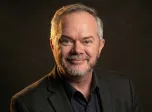
Dave Saunders is the founder of Base Reality Group and a Fractional CPO for product companies. He was a founder and operator at Galen Robotics, where the surgical-robotics platform earned FDA De Novo authorization in 2023, and he managed a 35-patent portfolio licensed from Johns Hopkins. He wrote Founders Who Finish and publishes The Build. More about Dave →