
GM is finishing a battery plant in Warren, Michigan this year, and it won't sell a single cell that comes off the line. The Battery Cell Development Center is part of $900 million the company is putting into research and prototype facilities there. The campus runs to 700 acres and GM opened it in the 1950s. When construction wraps, the line turns out thousands of cells a year, all of them for development work. Production cells come from its suppliers.
The Wallace Battery Cell Innovation Center opened on the same campus in 2022 and makes about a dozen full-sized prototype cells a week. The new building makes thousands. Neither number is production volume. The stretch between a working chemistry and gigascale manufacturing has a name in this industry, the valley of death, and GM just spent $900 million furnishing it. The company aims to commercialize its lithium-manganese-rich chemistry in 2028, and started prototyping sodium-ion cells in June.
The two questions a cell line has to answer
A dozen cells a week answers chemistry questions. Does this cathode hold its capacity through a winter, and what's left of it by cycle four hundred. Radu Theyyunni directs global propulsion virtual engineering at GM, and he told Latitude Media his team can tell within days how a change to the chemistry moves cost, range, performance and safety.
Thousands a week answers whether you can make the same cell twice. Coating thickness drifts. One lot of separator film behaves differently from the lot before it. A dozen hand-built cells hide all of that, because somebody is watching every step. At thousands, nobody is, and the process has to hold the tolerance on its own.
Buying the standing to check someone else's work
GM buys its cells from LG, Panasonic, CATL and BYD, and the new building doesn't change that. Mo Gallegos runs the development center, and he explained to Latitude Media why GM built it anyway: understanding how a cell gets made from the ground up makes you “a better buyer and a better partner.”
What a pilot line produces isn't cells. It's a written process definition, and the standing to read what a supplier tells you. Your contract manufacturer comes back with a yield number and a four-month tooling fix, and somebody on your side has to know whether both of those are true.
What a ten-person company keeps in house
Outsourcing most of the manufacturing is the right call for a small hardware company. The decision that matters is which piece of the process you run yourself, badly and at small volume, so you can buy the rest of it well. GM's answer is the whole cell, at a scale where the process starts misbehaving. For a ten-person device company the answer is smaller, and it isn't zero. One subassembly, built in house long enough to learn what breaks it, buys you the vocabulary for every supplier conversation that follows.
The books work the same way. You'll never do your own accounting, and you still have to read the statement and catch the number that moved for a reason nobody mentioned. Learning that much accounting costs an evening. Learning the manufacturing version cost GM $900 million, and for a ten-person company it costs one stubborn subassembly.
Dave's take
A pilot line looks like waste right up until the first supplier call where the numbers don't add up. My rule on this is that a founder should be able to build, badly, at least one of the things they buy. Keep a piece of the making and you keep the ability to tell when you're being managed.
From Dave’s video library
Dave walks through five decisions that lock in the moment engineering starts, including the manufacturing model, and why the commercial conversation has to come first.
I’m here to help you scale.
Work With DavePrefer a smaller first step? Book a $500 one-hour working session →
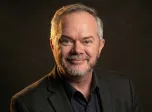
Dave Saunders is the founder of Base Reality Group and a Fractional CPO for product companies. He was a founder and operator at Galen Robotics, where the surgical-robotics platform earned FDA De Novo authorization in 2023, and he managed a 35-patent portfolio licensed from Johns Hopkins. He wrote Founders Who Finish and publishes The Build. More about Dave →