
Tony Song buys battery units for a living, and he carries three prices in his head. The Chinese ones start around $70 to $80 per kilowatt-hour, and by the time tariffs, shipping, and service costs are added they land near $120. Add ten or twenty dollars to that for units built elsewhere, most of which still fail the new foreign-entity rules because their supply chains run back through China anyway. American-made units are the outlier at $160 to $180. Song runs engineering, procurement, and construction at the storage developer GridStor, and he told Latitude Media that paying the American premium to qualify for the 30% investment tax credit is still his best option. For now.
Song will change his mind at a number. If the Chinese units keep falling toward the high $50s or low $60s, they land under $100 in the United States even after tariffs, and the credit stops paying for the premium it was supposed to offset.
He is not the only one running that arithmetic. Ravi Manghani, who runs strategic storage sourcing at the procurement platform Anza Renewables, told Latitude Media that roughly two projects in ten now treat proceeding without the credit as their baseline plan. He called it a math problem.
What it costs to claim the credit
Manghani's point is that a developer cannot subtract 30% from a project's cost and call it done. The credit requires prevailing wages, which in states like California means union labor at union rates. It requires documented foreign-entity compliance, and a developer who plans to sell the credit for cash on the transferability market pays legal fees to prove that compliance to the buyer. Add back the equipment premium that started the exercise. The 30% is a gross number, and all of those costs come out of it before the developer sees a dollar.
The vagueness costs more than the premium
A year after the One Big Beautiful Bill attached foreign-entity restrictions to the credit, the IRS still has not said what counts as Chinese control, or how much foreign-held debt disqualifies a developer. Manghani said the market is waiting. A developer signing equipment contracts this month is committing capital against a rule nobody has written, and that project will be audited later under whatever the rule turns out to say.
Capital prices uncertainty the way it prices everything else. A credit that can vanish on a definition nobody has published yet is not a foundation to build on. It is a variable, and it belongs in the model where the other variables already live: the wind forecast, the commodity curve, the interconnection queue.
I have watched a version of this play out in medical devices, where the payer is a hospital and the instrument is a reimbursement code. When I work with a founder building a surgical robot, the first thing I ask for is the payback model: what one procedure pays, and how many procedures it takes before the hospital has covered the cost of the box. I want the CFO and the coding people in the room before the surgeons fall in love with the device, because they are the ones who decide whether the money shows up. The economic story is the product, and that holds whether the money comes from a hospital's finance office or from the IRS.
The compliant option is also the newer factory
There is a cost the price per kilowatt-hour does not show. Samsung SDI and LG Energy will not have their U.S. capacity running before late 2026 or early 2027, so a developer who needs a project energized sooner buys from the mature Chinese supply regardless of what the credit pays. Song raised the problem facing developers who can wait: a new factory usually takes a year or two to work out its quality problems, so the first domestic cells off the line are early production. The premium that unlocks the credit also buys cells from a line that has not settled down yet.
So a developer is weighing two different risks against a rule that does not exist, which is a harder problem than picking the cheaper unit. Two in ten is a small share. But GridStor used to pursue the credit as a matter of course and now weighs it project by project, and it is making that call while the guidance is still unwritten. Making it afterward would cost nothing and prove nothing.
Run the project twice. Once with the incentive and once without it, and let the version without it decide whether you build. If the only version that works depends on a rule the IRS has not finished writing, then what you have is a financing instrument with a project attached to it.
From Dave’s video library
Dave shows how to put a number on something that looks unmeasurable, and how little data a real decision needs.
I’m here to help you scale.
Work With DavePrefer a smaller first step? Book a $500 one-hour working session →
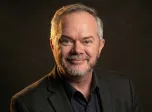
Dave Saunders is the founder of Base Reality Group and a Fractional CPO for product companies. He was a founder and operator at Galen Robotics, where the surgical-robotics platform earned FDA De Novo authorization in 2023, and he managed a 35-patent portfolio licensed from Johns Hopkins. He wrote Founders Who Finish and publishes The Build. More about Dave →