
A machine in an outpatient lab can now find a vein, tell it apart from an artery, apply the tourniquet, prep the skin, insert the needle, change the tubes, and put on the bandage. Nobody touches the patient. The FDA authorized it on August 19 through the De Novo pathway, and gave Vitestro's Aletta a device category that did not exist the day before. The sentence that decides whether the company has a business is none of that. It's a ratio in the labeling: one phlebotomist, three machines.
The ratio is the product
The buyer is a hospital lab or an outpatient draw station with phlebotomy positions it has not been able to fill. What that buyer is purchasing is coverage. The FDA found the device drew blood at rates comparable to or better than trained human phlebotomists across diverse patient populations, which is the price of admission. A machine that draws as well as a person, one for one, gives a lab manager nothing. At one to three, the salary math opens up.
I've been saying for years that in this category the economic story is the product, not a story you tell about the product. Labs and hospitals coming out of COVID don't fund science experiments. The CFO wants to know when the thing pays for itself, and the answer has to be a small number a reasonable person believes. Vitestro's small number is three.
What the human still does
The authorization keeps a supervisor trained in phlebotomy in the loop, and it spells out what that person does. They start the session. They confirm the collection tubes fill in the right order. They verify each tube is adequately full when the draw finishes. They answer the alerts. Someone trained cleans the device between patients.
Read that list as a time study, because that's what it is. Whatever those duties take per draw sets the real ceiling on how many machines one person can watch. If verifying fill volumes takes ten seconds, three is conservative. If it takes ninety, three is optimistic and the second machine spends its afternoon waiting. The engineer who decided how an operator confirms a tube was writing the pricing model, whether or not anyone in the building described it that way.
Adults, outpatient, supervised
Aletta is authorized for adults in outpatient settings. Those few words draw the map of what Vitestro can sell tomorrow. Inpatient units are outside it. Pediatrics is outside it. So are the hard-stick populations where an experienced phlebotomist earns their reputation, the oncology patients and the elderly with fragile veins, which is where automation would be worth the most and where the evidence is hardest to produce. Each of those expansions is a separate argument with separate clinical data behind it.
The FDA published special controls the same day, covering labeling, performance testing, and clinical testing, and a competitor can now meet them through a 510(k). Going first bought Vitestro the definition of the category and paid to pave the road behind it. I worked through that trade in the Momentis note in July, and the arithmetic hasn't changed.
The money already knew. Vitestro raised $70 million in March, from Labcorp's venture arm, Mayo Clinic, Sutter Health, and Fred Moll, who co-founded Intuitive Surgical. That list is mostly customers, plus the man who has done this before.
Dave's take
The headline result is that the robot sticks a vein about as well as a trained person, and founders in this category keep mistaking that for the win. I've made the same argument about surgical robots for a decade. The value of the da Vinci was never that it beat the best hands in the room, it was that it grew the population of surgeons who could perform a minimally invasive prostatectomy by orders of magnitude. More surgeons, more patients. Vitestro's version of that number is three, and they had to prove it to a regulator before a single lab could buy it.
From Dave’s video library
Dave works through which parts of a job belong to a machine and which stay with a person, and what it costs when you draw that line by guessing.
I’m here to help you scale.
Work With DavePrefer a smaller first step? Book a $500 one-hour working session →
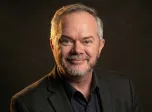
Dave Saunders is the founder of Base Reality Group and a Fractional CPO for product companies. He was a founder and operator at Galen Robotics, where the surgical-robotics platform earned FDA De Novo authorization in 2023, and he managed a 35-patent portfolio licensed from Johns Hopkins. He wrote Founders Who Finish and publishes The Build. More about Dave →