
Geographic atrophy, a form of age-related macular degeneration, is too common to count as a rare disease. Science Corporation carved a rare disease out of it: patients blinded in both eyes by the advanced form, with no other eye disease to blame. The FDA accepted that slice as an "orphan subset" this summer, which qualified Science's PRIMA retinal implant for a narrow US route. This week Science raised a $400 million Series D, partly to take PRIMA down that route.
PRIMA pairs a retinal implant with glasses whose camera projects the scene onto the implant in near-infrared light. Its evidence is a single-arm trial of 38 patients. Most of the 38 gained 10 or more letters on an eye chart and read at home with the device, and the gains held through 36 months. PRIMA has carried a CE mark in Europe since July.
The 8,000-patient rule and the profit cap
The US route is the Humanitarian Device Exemption. A device qualifies only if it treats a condition affecting no more than 8,000 people in the United States a year, and in return its application is exempt from the effectiveness requirements a full premarket approval has to meet. That exemption is the attraction for a company whose evidence is one single-arm trial.
The exemption also limits profit. A humanitarian device can be sold at a profit in only two cases: it's labeled for a childhood condition, or it treats an adult condition too rare in children to make a children's version practical. Advanced geographic atrophy is age-related, so PRIMA looks like it fits the adult case, though that's the FDA's call.
Even an eligible device has a cap. The FDA limits profitable sales to an annual distribution number: the devices one patient needs in a year, multiplied by 8,000. If the agency counts one PRIMA implant per patient, profitable US sales stop at 8,000 units a year, and anything past that sells at no profit until the year turns over.
What the round leaves unsaid
Science's announcement puts Europe first. The company has filed national reimbursement applications there and expects the first commercial implant in Germany, and the round will widen PRIMA's availability across Europe. It will also prepare the US launch and fund manufacturing, operations and research.
The announcement doesn't say what comes after the 8,000 units. Patients outside the orphan subset sit outside the exemption, so reaching them means a premarket approval and a trial built to show effectiveness, and nothing in the Series D announcement names that study. It may be planned and unannounced. For a company that has raised more than $900 million since 2021, that study is the line I'd most want to see in the plan.
The second filing belongs in the first plan
Defense hardware has a rough parallel to PRIMA's position in low-rate initial production, which buys a capped quantity of a new system before the full-rate production decision. Full-rate production comes only after operational testing, so a program that wants to scale has to plan and fund those tests while the first capped lots are still being built. A capped medical route asks the same of a device company: the second filing's trial gets designed and paid for during the first. Before the first filing goes in, I'd want the second filing named in the plan and its trial budgeted in the same raise.
Dave's take
With one single-arm trial in hand, I'd take the humanitarian route too, because it gets a working device to blind patients sooner. My caution is for the spreadsheet: eight thousand implants a year looks like a market until you price the study it takes to sell the 8,001st at a profit.
From Dave’s video library
Today's Failure Modes Friday: how a software fuse in the Lucid Air let lighting circuits overheat.
I’m here to help you scale.
Work With DavePrefer a smaller first step? Book a $500 one-hour working session →
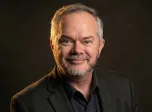
Dave Saunders is the founder of Base Reality Group and a Fractional CPO for product companies. He was a founder and operator at Galen Robotics, where the surgical-robotics platform earned FDA De Novo authorization in 2023, and he managed a 35-patent portfolio licensed from Johns Hopkins. He wrote Founders Who Finish and publishes The Build. More about Dave →