
Every child in the Autus study got a heart valve that a cardiologist can widen later with a balloon catheter, and so far two of them have needed it. The FDA approved Edwards Lifesciences' Autus Size-Adjustable Valve on October 1 for children with congenital pulmonary valve disease. It's the first heart valve built to be expanded after surgery as the patient grows. The 62-patient study behind the approval shows the valve works well as an implant. Whether widening it spares children repeat open-heart surgery is a question the FDA itself says will take longer studies to answer.
What 62 children showed
The pivotal study enrolled 62 children at 12 US sites. According to the FDA, every procedure succeeded, with no deaths, no strokes and no clots that needed treatment. At six months, the first 60 patients had acceptable blood flow through the right side of the heart and no more than mild leakage back through the valve. Three valve frames fractured and two patients had a leaflet that moved less than it should, all without symptoms. Edwards adds that every patient who reached one year had acceptable pressure gradients, less than moderate regurgitation and no reinterventions.
Conventional valves use animal tissue for their leaflets, and that tissue tends to stiffen and wear faster in children. Autus uses ePTFE, a polymer, and the FDA says no valve with polymer leaflets had been approved before, for any indication. The agency reviewed it through premarket approval, its most demanding pathway for devices.
What two children showed
The valve goes in at about 13 millimeters, sized for a toddler, and can be widened to about 22, close to an adult pulmonary valve. That expansion range is why a surgeon would choose this valve over a fixed one the child will outgrow. In the study, two children began to outgrow their valves. Both had them expanded without another open-heart operation.
The FDA's release calls the experience in those two children limited. It says longer studies are running to show that expansion keeps the valve working and leads to fewer operations, and Edwards will follow patients every year for ten years. Until then, the agency's wording follows the data: the valve may reduce repeat open-heart surgery. A child implanted as a toddler could reach adolescence before anyone knows whether one valve lasted the whole way.
Edwards' ten-year follow-up is a product deliverable
A ten-year question attached to a product already on sale is common in hardware. Orthopedic implants sold on longevity carry one, and so do grid batteries sold on a fifteen-year degradation curve. In each, the launch data shows the product works at the start, and the feature that sets the price is proven years after sales begin.
For Edwards, the ten-year follow-up decides what the company can tell surgeons in year three. That puts the study on the product roadmap, with an owner, a budget and a schedule, beside the next hardware revision. The same study also caps the marketing. Until it shows fewer operations, I'd keep the sales deck and the website to the FDA's wording, that the valve may reduce repeat surgery. A stronger claim would run ahead of the evidence the approval rests on.
I'd also map each year of follow-up to the buying decision it unlocks. One-year results persuade the centers that ran the trial. A surgeon at a hospital that's never used the device needs more before choosing it for a three-year-old. That surgeon is waiting on children who have had their valves widened, perhaps more than once, and stayed out of the operating room.
Dave's take
The FDA's release is a good model for the launch materials of any product like this. It names the two expansions, calls them limited and says what the follow-up still has to show. A surgeon deciding about a three-year-old will trust a company that writes the same way.
From Dave’s video library
Dave checks the MIT report behind the claim that 95 percent of AI pilots fail against the headline built on it.
I’m here to help you scale.
Work With DavePrefer a smaller first step? Book a $500 one-hour working session →
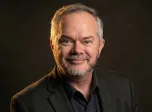
Dave Saunders is the founder of Base Reality Group and a Fractional CPO for product companies. He was a founder and operator at Galen Robotics, where the surgical-robotics platform earned FDA De Novo authorization in 2023, and he managed a 35-patent portfolio licensed from Johns Hopkins. He wrote Founders Who Finish and publishes The Build. More about Dave →