
Synchron has stopped enrolling patients in the trial of its second-generation brain implant, WIRED reported on November 12. The company says the problem involves the lead, the cable that carries signals from its Stentrode sensor to the implanted electronics. Synchron has since brought the lead's design and manufacturing in-house, and it plans to upgrade the whole Stentrode system before enrollment resumes.
From a chest wire to Bluetooth
The Stentrode is a stent-like mesh tube inserted into the jugular vein at the base of the neck and guided by catheter to sit over the brain's motor cortex, so it needs no brain surgery. According to WIRED, the first version connected through an external wire on the user's chest, and ten volunteers in the US and Australia used it to email, text, shop and bank. The second version is fully wireless over Bluetooth. Its multisite trial opened this spring in the US, with sister sites in Australia and Canada, and some participants already have the device.
Synchron's statement says the issue doesn't involve the Stentrode itself, that no safety problem has turned up, and that the company chose to pause without any direction from the FDA. My guess, and the sources don't say, is that going wireless raised the bar for that cable, because the electronics it connects to are now implanted too.
Why one cable holds up enrollment
Early trials like this one are how a company earns the larger pivotal trial the FDA needs before it can approve a device. A coordinator at one site told WIRED the pause was Synchron making sure it gets the readouts it's looking for, and the company says enrollment will resume once its hardware upgrades are done. Two of the five US sites WIRED reached confirmed that recruitment there is on hold.
STAT reports that Tom Oxley, Synchron's CEO, made a cryptic comment on a New York panel last week. The system has hundreds of components, he said, and “it just takes a delayed one to slow down your submission to the FDA.” One particular component had held the company up. He didn't name it, and STAT says the pause gives the comment context.
Neuralink hit an implant problem of its own in 2024. A few weeks after its first volunteer, Noland Arbaugh, received the device, WIRED recounts, several of its 64 thin wires came out of his brain and he lost cursor control. Neuralink restored control by modifying its recording algorithm. Synchron's fix is going into hardware, which means a new lead and an upgraded Stentrode built and ready before the next patient enrolls.
Bringing the cable in-house
Synchron has brought the cable's design and manufacturing in-house as part of a larger fix. WIRED reports it's upgrading the whole Stentrode system, cable included, and hiring in San Diego to design and manufacture the new cable and Stentrode. It's also cutting jobs and scaling back in New York. The company closed a $200 million round last fall at a valuation Bloomberg estimated near $1 billion, with backing from Khosla Ventures and the venture firms of Bill Gates and Jeff Bezos.
Before a first patient, I would go through the parts list and mark every part that has to do something it didn't do in the last version. For each marked part, the test is whether your own engineers could change it. Where they couldn't, I'd want the design data in hand and a plan to build or second-source the part before enrollment starts.
Dave's take
Synchron is redesigning the cable and the Stentrode with some participants already implanted and enrollment on hold until the new hardware is ready. Done before the first participant, the same parts-list check is an engineering task with no study waiting on it.
From Dave’s video library
This week's Failure Modes Friday traces how Cloudflare's worst outage since 2019 started with a single permissions change.
I’m here to help you scale.
Work With DavePrefer a smaller first step? Book a $500 one-hour working session →
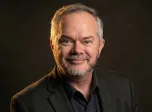
Dave Saunders is the founder of Base Reality Group and a Fractional CPO for product companies. He was a founder and operator at Galen Robotics, where the surgical-robotics platform earned FDA De Novo authorization in 2023, and he managed a 35-patent portfolio licensed from Johns Hopkins. He wrote Founders Who Finish and publishes The Build. More about Dave →