
SoftBank agreed in October 2025 to buy ABB’s robotics division for $5.375 billion. On November 5, ABB said China’s foreign investment security review office had prohibited the purchase of the division’s China business. No official reason has been announced. Reports point to two concerns, losing manufacturing capability and the security of robotics data, and the first concern is about the plants ABB built in China to serve Chinese customers.
Where ABB builds for China
ABB opened a robotics plant in Shanghai in 2022. China is ABB’s largest robotics market, and about 90% of the machines ABB sells to Chinese customers are built in China, the New York Times reported. A Chinese reviewer worried about losing manufacturing capability is looking at that plant and that 90%. A3, citing the Financial Times, says regulators had been expected to approve the deal.
A plant like that puts jobs, suppliers and production know-how inside China, and China’s foreign investment security review office examines foreign purchases of businesses like it. The office used that power here. In April, the National Development and Reform Commission, which houses the office, blocked Meta’s proposed takeover of the AI startup Manus, Supply Chain Digital reports.
Who carries the approvals
ABB’s statement says the process to obtain regulatory approvals is managed by SoftBank, and ABB learned of the prohibition from SoftBank. The two companies say they’re working constructively on the deal, and a Reuters source quoted by A3 says SoftBank is in talks with Chinese authorities. Those talks run through the buyer.
The prohibition, as ABB describes it, covers the robotics business in China, the division’s largest market, where it builds about 90% of the machines it sells there. The statement doesn’t say what that means for the rest of the division, and neither company has said whether the deal will be restructured around the China operation. I’d want any purchase agreement for a company with plants in two countries to name who files in each one and what happens if one country blocks part of the business.
The same decision at startup size
A founder makes ABB’s choice at a smaller size when picking a contract manufacturer in Shenzhen, Penang or Monterrey, adding an assembly line near an anchor customer, or deciding where field data from robots, batteries or devices gets stored. Each of those choices can also add a government that reviews an eventual sale, and a dataset that government may want kept inside its borders.
The data adds a stake the plant alone doesn’t. A robot fleet working in a customer’s factory logs cycle times and faults on the line, and robotics data is one of the two concerns in the reports on ABB. A founder who stores that data in the country where the robots run has also picked which regulator will care about it when the company is sold.
If a buyer showed up next year, which governments would have to approve the sale, and could it close if one refused? For a company whose only tooling sits in a foreign plant, or whose IP is held by a foreign subsidiary, one regulator could hold the whole deal. Keeping the IP and core data in an entity you could sell without the foreign operation, and setting up that operation so it could be carved out and run on its own, is far easier at twenty people than at two thousand.
I’d settle this when choosing suppliers, while the choice is still a contract. Once a foreign subsidiary holds the IP, moving it takes lawyers in two countries, and a buyer’s diligence team will find it whether you’ve planned for it or not.
From Dave’s video library
Dave on the signs that a founder is already doing the product leader's job, and why hiring a full-time CPO isn't the only way to fix it.
I’m here to help you scale.
Work With DavePrefer a smaller first step? Book a $500 one-hour working session →
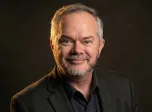
Dave Saunders is the founder of Base Reality Group and a Fractional CPO for product companies. He was a founder and operator at Galen Robotics, where the surgical-robotics platform earned FDA De Novo authorization in 2023, and he managed a 35-patent portfolio licensed from Johns Hopkins. He wrote Founders Who Finish and publishes The Build. More about Dave →