
Precision gears, encoders, actuators and sensors are parts a robot builder rarely traces back to a country, and on October 28 they came under a national security finding. President Trump signed a proclamation agreeing with the Commerce Department that imports of robots, industrial machinery, and their parts and components threaten national security. He ordered 180 days of trade negotiations first and kept tariffs, quotas and fees available if the talks fail. Prices haven’t moved, and the 180 days are the time to find out which of your parts would move if a duty follows.
How a finding turns into a duty
Section 232 of the Trade Expansion Act lets the president adjust imports that the Commerce Department finds threaten national security. Commerce sent its report on robotics and industrial machinery in the 90 days before the proclamation, and the president agreed with its finding. For a remedy he chose negotiation. Commerce and the U.S. Trade Representative are to pursue agreements with trading partners and give him a progress update within 180 days, which puts it around April 26, 2027.
If the talks go badly, the proclamation says the president may impose or change tariffs, quotas or fees, or start a program that pays for new U.S. production of robots, machinery and parts. The statute lets him act without an agreement if none is reached within the 180 days, or if one is reached and fails. Ash Sharma of Interact Analysis told The Robot Report that no robotics tariff is in force yet and that the proclamation clearly signals where U.S. policy is heading.
What the finding reaches
The proclamation covers parts and components alongside finished machines. Robert Little, formerly chief of robotics strategy at Novanta, told The Robot Report that his biggest concern is the thin U.S. supply of sensors, actuators, precision gears and encoders. FANUC, Teradyne Robotics and Yaskawa have announced U.S. manufacturing investments. A robotics startup of, say, 40 people can’t build a gear plant, so whatever happens to imported gears happens to its unit cost.
A device maker buying automation faces the same finding from the other side. The proclamation lists medical devices among the products industrial machinery is used to make, and a company collecting quotes for a 2027 assembly line could see imported equipment change price between the quote and the delivery.
Three things to do before April
First, pull the bill of materials and mark every part made outside the U.S., with its country and its share of unit cost.
Zoll shows why that list is worth building even if no duty ever arrives. Its chairman told AdvaMed’s conference that AI data centers are now competing with medtech for chips, and that Zoll had bought its circuit boards through contract manufacturers with no direct tie to the chipmakers. The parts list that shows a robot builder its tariff risk also shows which suppliers it has never spoken to.
Second, sort the parts list by cost and price the product twice: once at today’s landed cost, and once with a duty on the top few imported lines. No rate has been announced, so choose one large enough to hurt, and check whether your gross margin and your quoted customer prices survive it.
Third, if margin or price breaks, use the months before the April update to change the terms. Ask suppliers for price-hold agreements, qualify a second source for the most expensive imported part, or add a clause to customer contracts that passes a new duty through. A company buying a production line can ask the vendor to hold the quoted price through delivery, or to put in writing who pays if a duty lands first.
Dave’s take
The date I’d circle in this proclamation is the April progress update, because it’s the first point where the talks can visibly fail. I’d want the parts list and both prices finished before then, so that whatever comes next is a decision about suppliers and customers instead of a scramble to do the arithmetic.
From Dave’s video library
In today's Failure Modes Friday I walk through GE HealthCare's correction for its Portrait monitoring system, where a software update could discharge patients from the system and reset their alarm settings to factory defaults.
I’m here to help you scale.
Work With DavePrefer a smaller first step? Book a $500 one-hour working session →
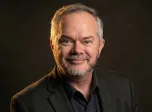
Dave Saunders is the founder of Base Reality Group and a Fractional CPO for product companies. He was a founder and operator at Galen Robotics, where the surgical-robotics platform earned FDA De Novo authorization in 2023, and he managed a 35-patent portfolio licensed from Johns Hopkins. He wrote Founders Who Finish and publishes The Build. More about Dave →