
Walmart supplied 90.5% of Symbotic’s revenue in the quarter that ended June 27, 2026. The dependence runs both ways: Symbotic needs Walmart’s orders, and Walmart needs Symbotic’s robots to keep its distribution centers moving. Walmart treated its half of that as a risk to price, and Symbotic’s SEC filings, traced in a Robot Report column last week, show what it bought. A founder signing a first big customer can price each of those clauses from the supplier’s side before the contract is signed.
What Walmart asked for
The 2022 master automation agreement gives Walmart continuity rights. Walmart can embed its own engineers with Symbotic, and technical material held in escrow becomes usable by Walmart under specified conditions. The 2025 agreement for Walmart’s store-level pickup and delivery systems repeats those rights. While those store systems are being built, the 2025 agreement also caps how many comparable systems Symbotic can sell to each outside customer every year, at a number the filing redacts. Nothing in the filings shows Walmart has ever exercised any of it.
When the store-systems deal closed in January 2025, Walmart committed $520 million of development funding. In return, Symbotic took on delivery obligations and accepted the cap on comparable sales to everyone else.
Pricing the clauses from the supplier’s side
I’ve argued that a company built on one partner doesn’t fully own a business it can’t keep running without that partner. Walmart asked the same question about Symbotic. Its answer was its own engineers inside the vendor and the technical material in escrow.
Symbotic took the $520 million without issuing a share, and it paid for the money in the contract. The sales cap limits how many comparable systems any other customer can buy from Symbotic in a year, which limits how fast a second or third account can grow during the build-out. The escrow and embedded-engineer rights give Walmart a way to keep its systems running with less help from Symbotic, which weakens Symbotic’s position at any renegotiation. A founder can put rough numbers on both costs, and those numbers belong in the board deck beside the order size.
Plan for the rollout that finishes on time
The Robot Report column raises a downside case in which Walmart does everything it promised. It stays satisfied, meets its commitments, and completes the distribution center rollout on schedule. Installation revenue then gives way to service and software, which bring in less, and growth depends on whatever replaces the program. A forecast that models only pauses and cancellations leaves this case out, because on paper it reads as success.
Replacing a program that size takes years. Symbotic has described about 24 months from a signed statement of work to acceptance at a new customer. About half of its roughly 2,000 employees at the end of fiscal 2025 worked at customer sites, installing, commissioning and maintaining systems. A startup has far fewer field engineers, and the ones it has are already busy at the anchor. Every week they spend at a second customer comes out of the account that brings in most of the revenue. I’d start a small paid project with a second buyer well before the anchor’s rollout winds down, to learn what a new site costs in people while that cost can still be absorbed.
Which orders the contract commits
Symbotic’s fiscal 2025 annual report says the contracts behind its backlog lack termination-for-convenience clauses. They can be ended for missed performance standards, insolvency, or specified changes in control. Because the customer can’t simply walk away from that backlog, a founder can sort an anchor’s demand into two piles: orders the customer is bound to, and expansion it can still decline. Engineers hired to serve the expansion stay on payroll whether or not those orders arrive.
Walmart has declined expansion before, with a product that worked. By November 2020 it had ended its relationship with Bossa Nova Robotics, whose shelf-scanning robots had reached about 500 stores, months after the two companies announced plans to reach 1,000. The Wall Street Journal reported that employees picking online orders were giving Walmart another way to monitor inventory. Bossa Nova laid off about half its staff. Before hiring against an anchor’s expansion, a founder should know what that customer could use instead of the product a year from now, and whether anything in the contract or the product makes that substitution harder.
Dave’s take
The clauses a customer asks for tell you what it is worried about. Walmart was worried about losing its supplier, and it wrote that worry into the contract. A founder’s own worries, a capped second account and a rollout that ends on schedule, belong in the same document before it is signed.
From Dave’s video library
This week's Monday MedTech: why Stryker cut its 2026 growth forecast after hip and knee procedures slowed, which its CEO tied to higher deductibles, and what Abbott's Amplatzer Paraclose PVL Occluder was approved to do.
I’m here to help you scale.
Work With DavePrefer a smaller first step? Book a $500 one-hour working session →
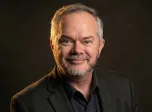
Dave Saunders is the founder of Base Reality Group and a Fractional CPO for product companies. He was a founder and operator at Galen Robotics, where the surgical-robotics platform earned FDA De Novo authorization in 2023, and he managed a 35-patent portfolio licensed from Johns Hopkins. He wrote Founders Who Finish and publishes The Build. More about Dave →