
Ruben Valiente runs a battery factory that opened this year, and he knows the first question buyers ask about it: who are these guys? He told ESS News he would ask the same thing in their place. His company, Maxxen Energy, builds 5 MWh containerized storage systems at a $35 million plant in Aydın, Türkiye. The brand is two or three years old, though its parent, Kontek Energy, has more than 30 years in renewable energy engineering.
On a utility-scale storage project, the developer buying the batteries often has a lender behind it, and the lender needs the same answer. It is betting that the batteries keep working, and that the supplier is still in business to honor the warranty, long after the money goes out. The storage industry calls a supplier that passes that test bankable. A brand with two or three years in market can't point to a long service record, so it assembles its case from evidence a lender can check.
Borrowing a supplier's test record
Maxxen buys its cells from Hithium under a 10 GWh supply agreement that runs five or six years, and it builds its containers to Hithium's design. It holds 27 safety certificates in its own name. For the large-scale fire test, UL 9540A, which shows how a fire spreads through a full container, it uses Hithium's results. A brand this young can't build a fire-test history on its own schedule, so it relies on its supplier's.
Valiente said Maxxen looked at 10 to 15 cell makers before signing with Hithium in 2024. Hithium won on quality and its product roadmap, and because it makes storage batteries only. A lender doing diligence on Maxxen is also reading Hithium's record, which made the supplier a credibility decision for Maxxen as well as a cost one.
Valiente also tells buyers where Maxxen is weaker than its competitors. The interview doesn't say which weaknesses he names. He brings in third-party due diligence as well, so buyers can check his claims with someone other than him.
Paying for the warehouse
Cells ship from China in batches one to four months apart, and some arrive late. So Maxxen keeps 200 to 250 MWh of cells and raw materials on site, which lets it truck a finished system to Germany, Romania or Spain within one to two weeks. Valiente said he'd rather not hold that stock, because inventory has to be financed, but without it Maxxen would miss delivery dates it had committed to.
A battery that arrives late pushes back the day a storage project starts earning, and with it the revenue that repays the project's loan. Maxxen's one-to-two-week promise holds because Maxxen paid to keep cells on the shelf, and a hardware company planning its cash has to fund that buffer before it quotes the date.
Lending customers the money
Maxxen also offers vendor financing: it lends money or extends credit so a buyer can purchase its batteries. Valiente has pitched it for small and mid-size projects, which have a harder time raising project finance. He told ESS News that letters of intent for these deals add up to about 4 GWh, and that buyers have signed activation fees on two or three contracts, for deliveries over the next six to 12 months. Once a contract is signed, Maxxen has to deliver, and a buyer who backs out forfeits the fee. Each battery ships a month or two before its project goes into commercial operation, so each loan starts close to the day its project begins earning.
When a supplier lends the buyer the money, I read the buyer's balance sheet before the supplier's order book, to see whether the buyer could have closed the deal with its own money. Maxxen delivered 664 MWh across 21 projects from January through September. Valiente said the batteries for the signed financing contracts haven't been delivered yet, so they aren't in that figure, and the financing letters of intent come to about six times it. I'd keep those 4 GWh in their own column until the buyers show they could have paid without Maxxen's loan.
Any hardware sale that needs a third party's sign-off works the way Maxxen's does. For Maxxen the third party is the project lender. For a warehouse robot sold on a lease, it's the leasing company's credit team, and for a surgical robot, the hospital's value analysis committee. Each wants test records, delivery terms and outside diligence it can check before the product has a history. Early in a hardware roadmap I ask which of those readers the company faces, because that reader decides which of those records the team has to produce.
Dave's take
A lender can check almost everything Valiente showed on that tour without taking his word for it. The vendor financing is the exception, because the demand it produces comes from the projects most likely to struggle with project finance, carried by Maxxen's own money. I'd leave those 4 GWh out of any forecast until the projects are earning.
From Dave’s video library
Dave on the five numbers a business should track, and why a dashboard of vanity metrics buries them.
I’m here to help you scale.
Work With DavePrefer a smaller first step? Book a $500 one-hour working session →
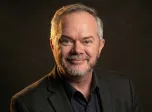
Dave Saunders is the founder of Base Reality Group and a Fractional CPO for product companies. He was a founder and operator at Galen Robotics, where the surgical-robotics platform earned FDA De Novo authorization in 2023, and he managed a 35-patent portfolio licensed from Johns Hopkins. He wrote Founders Who Finish and publishes The Build. More about Dave →