
A technology license is a bet that somebody else will build a factory. Last week CATL placed one in Egypt. BME is a battery maker founded by the truck builder MCV and the automotive supplier Auto D. CATL will license its battery pack technology to BME, supply the production equipment and train BME's staff. BME funds and builds the plant.
Caixin puts the opening investment above 2 billion Egyptian pounds, about $38 million, for a line that starts at 1 gigawatt-hour a year of packs for heavy commercial vehicles and could reach 5 in a second phase. Alongside the license sits a proposed arrangement for BME to buy battery cells from CATL. In Caixin's account, the structure lets CATL earn service profits and lock in cell supply orders. This is CATL's first license for pack technology. Its cell licensing already runs in the United States. Ford paid for its own lithium iron phosphate battery plant, CATL holds no shares in it, and CATL supplies the technology license and operating services.
What CATL is paid for
A pack is the assembly around the cells: modules, wiring, cooling, the battery management electronics and the enclosure. BME gets the know-how to build that assembly in Egypt, with a target of sourcing 40% of the components locally. The cells, if the proposed arrangement holds, come from CATL. So CATL collects for services while the plant goes up, and for cells on every pack the line ships once it runs. BME carries the $38 million and the job of finding truck makers who want the packs.
What 24M was paid for
24M Technologies, cofounded by MIT professor Yet-Ming Chiang, spent years on a cheaper way to make lithium-ion cells and was once valued above $1 billion. Its process worked with the lithium-ion chemistry the industry already used, and 24M sold it as licenses to companies that would build their own factories. The largest bet came from Freyr, which signed licenses in December 2020 for Norway and in October 2021 for the United States. Today's episode of The Teardown, at the end of this note, tells that story in full.
Freyr's plans moved. It cut jobs in Norway and pulled out of Giga Arctic, the full-scale plant planned for Mo i Rana. On November 4, 2024, it ended both licenses, paid 24M $3 million for services already provided, and forfeited 6,975,956 shares of 24M's Series G preferred stock. The same week it agreed to buy Trina Solar's 5-gigawatt solar module factory in Wilmer, Texas, for $340 million. This March, The Information reported that 24M would shut down and auction its property.
I don't know what 24M's contracts said, and Chiang declined to speak on the record about the shutdown. The whole industry had a bad stretch, too: MIT Technology Review points to cooling U.S. EV demand and gutted Inflation Reduction Act provisions. But the termination shows what 24M held once Freyr stopped. It had been paid for services rendered, and anything it stood to earn from cells made under the license needed a Freyr factory that was no longer in Freyr's plans.
The question at signing
The two deals split on what the licensee keeps buying after the plant opens, and for CATL that's cells. A process company has only the process, so its revenue lives inside the licensee's capital plan. Freyr's capital went to solar panels. Anyone who licenses a method and ships no product of their own carries the same exposure, whether the method is an electrolyzer stack design or a surgical instrument licensed to a larger device maker. Sit where 24M sat in 2020, with Freyr's signature fresh, and the question is what you still own if your biggest licensee never builds. The answers get written on signing day or not at all: a date by which the line has to run, a minimum annual payment that doesn't wait for output, exclusivity that lapses when the licensee stalls so the territory can go to someone else. CATL's answer is a component the licensee's line can't run without. A process startup usually has no such part, so it needs those terms in the contract.
Dave's take
Licensing looks like the capital-light route for a hard-tech startup, and on the balance sheet it is. The capital still has to be spent, just by someone whose plans you don't control. Price the license for the year that someone changes their mind.
From Dave’s video library
In today's Teardown, Dave walks through 24M Technologies, which licensed a cheaper way to make lithium-ion cells, and what happened when its biggest licensee bought a solar factory instead.
I’m here to help you scale.
Work With DavePrefer a smaller first step? Book a $500 one-hour working session →
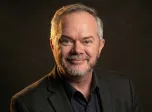
Dave Saunders is the founder of Base Reality Group and a Fractional CPO for product companies. He was a founder and operator at Galen Robotics, where the surgical-robotics platform earned FDA De Novo authorization in 2023, and he managed a 35-patent portfolio licensed from Johns Hopkins. He wrote Founders Who Finish and publishes The Build. More about Dave →