
Until this week, a toddler born with a malformed pulmonary valve faced a fixed sequence. Surgeons sewed in a replacement valve sized for a small child, then reopened the chest when the child outgrew it, often more than once. On October 1 the FDA approved a valve built to break that sequence. Edwards Lifesciences' Autus valve goes in at about 13 millimeters. As the child grows, it can be stretched toward 22, close to adult size, with a balloon passed through a catheter.
About 4,200 babies a year in the U.S. are born with a congenital pulmonary valve abnormality, according to the FDA. The agency's announcement leads with what the valve should mean for families, and Michelle Tarver, who runs the agency's device center, put it as far fewer trips to the operating room. The approval itself shows the valve works at six months. Fewer surgeries across a childhood is a claim six months of data can't test, and the FDA says longer-term studies will assess how well expansion holds up and whether it cuts surgeries. MedTech Dive reports a 10-year follow-up is under way.
What six months of data show
The pivotal trial enrolled 62 children at 12 U.S. sites, and the FDA reported six-month results on the first 60. Every implant procedure succeeded, with no deaths, blood clots or strokes. Three valves had frame fractures and two had reduced leaflet movement, and none of those five children had symptoms. The Autus is also the first FDA-approved heart valve with polymer leaflets in place of animal tissue.
Two of those children needed the feature the valve exists for. Both had early valve deterioration, and both had their valves expanded without surgery. That's a strong early signal from a sample of two.
Edwards bought before the long data
Edwards bought Autus Valve Technologies in February for $128.9 million up front, plus up to $132.5 million in milestone payments, months before the approval came through. That came on top of an $11.5 million option payment Edwards had made earlier. The valve carried Breakthrough Device designation and became the first pediatric approval from the FDA's Total Product Life Cycle Advisory Program. Edwards paid for a working mechanism and an early signal, and the evidence on surgeries avoided will arrive on its watch.
I expect hospitals and payers to keep asking for the ten-year data. Last month I wrote about a heart valve Medicare started paying for sixteen months after its FDA approval.
Two evidence plans, written on day one
The Autus program runs on two evidence plans. The first was a pivotal trial read at six months, which got the valve approved. The second is a ten-year follow-up of the same children, which will show whether it cuts surgeries.
Hardware outside medicine meets the same split whenever the buyer pays for something that happens years later, such as a grid battery's service life. Certification covers the product as it ships, and the long claim has to be proven in the field. I want both plans written down at the start of a program: one that gets the product through the gate, and one that proves the long benefit on its own clock. The second plan has to settle early what the units in the field record, who pays for the follow-up, and who owns the data, because none of that is easy to add once the product ships.
Dave's take
The Autus team built expansion into the first device, so every child in the ten-year follow-up can add to the evidence for fewer surgeries. That's the design choice I would copy: a first version whose units in the field are already collecting proof of the benefit you sell, with a budget for the years that proof takes.
From Dave’s video library
Dave walks through what a fractional CPO costs next to a full-time hire, what the work looks like week to week, and why it takes six months to pay off.
I’m here to help you scale.
Work With DavePrefer a smaller first step? Book a $500 one-hour working session →
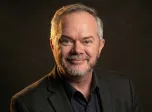
Dave Saunders is the founder of Base Reality Group and a Fractional CPO for product companies. He was a founder and operator at Galen Robotics, where the surgical-robotics platform earned FDA De Novo authorization in 2023, and he managed a 35-patent portfolio licensed from Johns Hopkins. He wrote Founders Who Finish and publishes The Build. More about Dave →