
More than half the people in this country live more than an hour from a hospital that can pull a clot out of their brain. Of the stroke patients who qualify for a mechanical thrombectomy, 12% get one. ARPA-H has put $175.3 million behind one reading of those two numbers, which is that the thing in short supply is the operator.
The awards come out of a program the Advanced Research Projects Agency for Health calls Autonomous Interventions and Robotics, run by program director Ileana Hancu. The stated goal is an endovascular robot that can perform a stroke intervention with progressively less direct human input. Siemens Healthineers takes up to $31.1 million and adds $5.4 million of its own, which puts its project at $36.5 million, with Stryker along as a sub-awardee under a partnership the two signed in 2025. Philips North America takes up to $33.7 million. Magnendo, an MIT spinout building magnetic navigation through the vasculature, takes up to $32 million. UC San Diego is in as well. Everybody has five years.
The shortage ARPA-H named is a building
A thrombectomy isn't one machine and one physician. It needs a CT scanner to rule out a bleed before anyone touches the patient, a biplane angio suite, contrast, anesthesia coverage, and a transfer protocol that gets the patient through the door while the tissue is still salvageable. The hospital an hour from the nearest stroke center, the one this program exists to reach, is usually short several of those. Autonomy takes a person out of the room. It doesn't take away the room.
That distinction decides what you're selling. A robot that removes the physician from a fully equipped neuro suite is a staffing product for large hospitals. A robot that brings thrombectomy to a community hospital is an infrastructure product, and its real bill of materials includes the imaging, the workflow, and the people who have to be trained to receive it. Those are two different companies. Pick one before you write the indication, because the indication is where the choice hardens.
Getting the machine there is its own discipline. We ran a shipping test on a surgical robot once, and the test company dropped the container off a raised forklift. The robot never rattled around inside. One of the actuators tore off its mounts anyway, because the payload sat perfectly still while everything around it stopped very fast. Internal kinetic energy had never crossed my mind. It rewrote the container, the roll-in and roll-out process, and how we secured the machine internally. There's video, and it was terrifying to watch. If your access story depends on hospitals with no robotics service team, shipping is a product requirement and not a line item.
Two of the four recipients already own the room
Siemens Healthineers and Philips sell the imaging a cath lab is built around, and between them they hold the two largest named awards. Stryker, riding in under Siemens, sells the neurovascular devices that travel through the catheter. A lot of this money went to companies whose equipment is already bolted into the rooms where an autonomous thrombectomy would have to work.
That's a read on where the difficulty sits. Navigation software that can't see the vessel through the imaging system a hospital already bought is software waiting on a building nobody plans to construct for it. Magnendo is the exception and the more interesting bet, because magnetic navigation changes the physics of getting a wire where it needs to go instead of automating the wire everyone already uses. If you don't own the installed base, changing the physics is the move available to you.
For anyone building hardware that has to live in somebody else's building, that's the question worth sitting with. Not whether the thing works on your bench. Whether it works through equipment that someone else specified, bought, and has no budget to replace.
The part that stays bespoke
Threading a catheter from the groin to a cerebral artery is a geometry problem, and geometry is where machines have been winning for twenty years. Deciding whether a particular clot comes out with aspiration or a stent retriever is not. Neither is knowing after the second pass that a third one does more harm than good, or reading the anatomy that says stop and close. That's decision making under uncertainty, and it isn't on anybody's roadmap. The routine half of a procedure automates first because the routine half is the half you can specify. The bespoke half is the one keeping the patient alive.
Dave's take
Autonomy is the word on the grant, and it's the part I'd bet against. I've argued for years that the design goal is to make the hard parts of a procedure disappear under the physician's own hands, not to take their hands off the work. But ARPA-H picked the right problem to spend five years on, and if this money buys better imaging, better navigation, and a machine that survives the trip to a hospital in the middle of nowhere, that's the win whether or not anything ends up running unattended.
From Dave’s video library
Dave walks through the BCG numbers behind the jagged frontier, where the same AI tool lifted consultants 40% on one task and left them 19 points worse on another.
I’m here to help you scale.
Work With DavePrefer a smaller first step? Book a $500 one-hour working session →
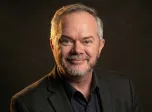
Dave Saunders is the founder of Base Reality Group and a Fractional CPO for product companies. He was a founder and operator at Galen Robotics, where the surgical-robotics platform earned FDA De Novo authorization in 2023, and he managed a 35-patent portfolio licensed from Johns Hopkins. He wrote Founders Who Finish and publishes The Build. More about Dave →