
In December of 2024, General Motors walked away from a battery plant it had nearly finished building. The Lansing, Michigan site runs to 2.8 million square feet. GM sold its stake to its joint venture partner, LG Energy Solution, kept its Ultium plants in Ohio and Tennessee, and its CFO Paul Jacobson said the company already had the cell and manufacturing capability it needed to grow with the EV market. On August 18 the plant started production without GM. Most of what comes off the line is not going into cars.
What the building makes now
LG has put more than two billion dollars into the 226-acre site since 2022 and is aiming at more than 35 gigawatt-hours a year. The plant runs lithium iron phosphate cells for grid and commercial storage, with DTE Energy as a named customer and LG's own Vertech arm integrating the systems. It also runs nickel manganese cobalt cells for cars, starting with Toyota's 2027 Highlander EV. About 900 people work there now. Full production is 1,700.
None of those customers were the plan. The site was announced in 2022 as Ultium Cells, a joint venture that existed to feed GM's own vehicles. The owner changed, the chemistry changed, and the end market moved from cars to the grid. The building didn't.
GM read its own demand wrong, and the plant was fine. A cell line can be tooled for LFP or NMC. The dry rooms, the electrical service, the trained operators, the suppliers qualified within a day's drive: all of it carries across a change of chemistry and a change of customer, because none of it was specific to a Chevrolet.
I have been on the other side of this
Before the internet went public I worked at a company that was the only game in town. Our customers were defense contractors and government labs, anyone with thousands of machines that needed to reach a mainframe. We hit a big monthly number one year and everybody got a custom leather jacket. Another time we had a party at the Smithsonian Air and Space Museum. Technically they held a private reception to thank us for a generous donation, which is a distinction I have never been able to make stick.
Then the internet opened up and our software was not built for regular people. We tried. We built a browser. We sold a version to AOL for the Mac. Eventually a high-density modem company acquired us to bundle the software, and when I flew out to brief their sales team, their VP of Sales stopped me halfway through the pitch. "I'm really not sure why you're here." He wasn't rude. He was right. His customers were ISPs connecting somebody's grandmother, not Boeing and not Los Alamos.
The asset in that story was code, which is supposed to be the flexible kind, and it would not bend at all. Who the user was ran down through the install process, the documentation, the support model, and the sales compensation plan. We were B2B in the DNA. The software faded out. It would have been cleaner if it had died.
The question to ask while the line is still on paper
Lansing and my old employer both got the market call wrong. One of them had somewhere to go afterward, and that was decided years earlier by people choosing tooling.
Flexibility of that kind costs money on the day you buy it. Equipment that can run a second chemistry is more expensive than equipment that runs one. A supplier qualified for two form factors takes longer to qualify. Every one of those calls looks like waste at the time, because at the time the forecast still looks right.
Your demand model will be wrong. What matters is what happens to the money you already spent when it is. Before the line gets built, that means asking: if this market comes in at half, what else can this equipment make, who buys that, and what would it cost us today to keep the door open. Sometimes the answer is that it costs too much and you take the concentrated bet deliberately. That's a fine answer. Arriving at it by default is not.
I have said before that if you want options, you need structure. That usually comes up about a founder's calendar, and it works the same on a factory floor. GM read the EV market wrong and it cost the company a stake in a building. It did not cost the building. Design for the market you expect, then spend a little on being wrong about it.
From Dave’s video library
Dave on the business that only runs while you are running it, and how to tell when you have built yourself a job.
I’m here to help you scale.
Work With DavePrefer a smaller first step? Book a $500 one-hour working session →
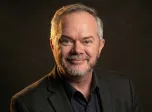
Dave Saunders is the founder of Base Reality Group and a Fractional CPO for product companies. He was a founder and operator at Galen Robotics, where the surgical-robotics platform earned FDA De Novo authorization in 2023, and he managed a 35-patent portfolio licensed from Johns Hopkins. He wrote Founders Who Finish and publishes The Build. More about Dave →