
The Navy signed a contract on August 17 that asks Raytheon to build more than a thousand Tomahawk cruise missiles a year. Raytheon currently builds about sixty. Acting Navy Secretary Hung Cao called it a landmark contract, which is what you say about $22.9 billion, and the money is the least interesting number in the deal.
The interesting number is seven. That's the length of the contract in years, and it's the term that makes a thousand missiles a year buildable at all.
Sixteen times the rate, same missile
Divide a thousand by sixty and you get roughly sixteen. Raytheon has to multiply its output by sixteen without changing the product, which means almost none of the hard work is engineering work on the missile. The design is done. What has to change is everything around it.
Raytheon president Phil Jasper named the four things in one sentence when the deal was announced: workforce, technology, supply chain, facilities. Every one of those is a purchase with a payback measured in years. A second production building does not earn its cost back in a quarter. A qualified supplier for a rocket motor case does not appear because you sent a purchase order. Somebody has to pay for the tooling, sit through first article inspection, and carry that supplier through qualification before a single part counts. Hiring and training a machinist who can hold the tolerance takes as long as it takes.
That is the shape of a rate problem in any hard-tech company. Rate is a design parameter, the same as mass or power draw, and it is the one nobody writes into the requirements document. You buy it with capital, and capital wants to know how long the demand lasts.
A one-year order funds overtime
A one-year order funds overtime and a second shift. A seven-year order funds a building. That difference has almost nothing to do with the size of the check and everything to do with how far out the customer is willing to commit.
Raytheon's output was already moving before this contract. The company delivered three times as many Tomahawks in the first half of 2026 as it did in the first half of 2025, off the back of a framework agreement signed in February. February set the terms. August put seven years behind them, and that is when you can justify pouring concrete.
The Pentagon has been running this play across programs, with similar multiyear deals for Patriot and THAAD interceptors signed earlier this month. The mechanism is the same every time. Give a manufacturer a horizon long enough to invest against and the capacity shows up. Take the horizon away and nobody sane builds the second building.
Your version of this is a letter of intent
No founder reading this is getting a seven-year Navy contract. What shows up instead is a letter of intent, a pilot agreement, a distributor's forecast, or a strategic investor who says they also want to be a customer. The question to put to any of them is the one Raytheon's finance team had to answer: how long is this good for, and does that horizon cover what I am about to spend?
Getting the order wrong looks like success right up until it doesn't. The pizza robot graveyard is full of machines that worked. Real hardware, real demos, dead companies, because the founders fell in love with their product and not their customer. Build the customer proof before you build the fleet.
The opposite mistake is real too. If a customer does commit and you cannot hold rate, you have handed them a reason to go qualify a second source, and you rarely get that position back. Both things are true, which is why there is no rule about building early or late. There is a number. Put the payback period on the capital next to the duration of the demand, and if the first one is longer than the second, you are not buying capacity. You are gambling.
Money is runway, not a moat, and a contract works the same way. Watch what a company builds with the number and how long it has to build it. Raytheon got seven years. Most founders are working against a customer who will not commit past next quarter, and that is a design constraint whether you write it down or not.
From Dave’s video library
Dave walks through what a large spending number does and does not buy, and where the judgment has to stay with you.
I’m here to help you scale.
Work With DavePrefer a smaller first step? Book a $500 one-hour working session →
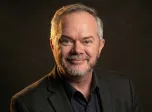
Dave Saunders is the founder of Base Reality Group and a Fractional CPO for product companies. He was a founder and operator at Galen Robotics, where the surgical-robotics platform earned FDA De Novo authorization in 2023, and he managed a 35-patent portfolio licensed from Johns Hopkins. He wrote Founders Who Finish and publishes The Build. More about Dave →