
On Tuesday, Vicarious Surgical's shareholders voted to sign the company's assets over to a trust for its creditors. The company had twelve years behind it, more than $425 million raised from investors including Bill Gates, a $1.1 billion valuation at its 2021 SPAC merger, and the first breakthrough device designation the FDA ever granted a surgical robot. It planned to file its dissolution paperwork in Delaware as early as the next day. MedTech Dive reports the company never achieved regulatory authorization for the system, and was still hoping to file for ventral hernia repair as its first indication.
I have watched a surgical robotics company from the inside, and I keep looking past the $425 million to the twelve years, and to what those twelve years were aimed at.
What the designation actually bought
Vicarious was the first surgical robot developer to win breakthrough device designation, and that was a real accomplishment. Keep in mind what it does, though. It buys earlier and more frequent access to the reviewers, plus a signal that the agency considers the clinical need worth prioritizing. It doesn't lower the evidence bar or shorten the engineering. You still have to write the submission.
Founders let that designation stand in for progress, and boards let them. I've sat in those meetings. The designation goes on slide three, everyone nods, and nobody asks the follow-up, which is what date the filing goes in.
Twelve years, and the design still wasn't frozen
A year earlier, Vicarious canceled its clinical trial plans so it could finish the design of the commercial version of the system. Look at the order of those two things. About eleven years in, a trial was on the calendar before the design was done, and then the trial had to give way so the design could catch up.
Design freeze is the gate that makes everything downstream mean anything. Founders outside regulated hardware tend to file it under paperwork. Verification and validation run against a specific design, so every time the design moves, your test evidence goes stale, your risk file goes stale, and you pay for that work a second time. A company that can't freeze is buying the same year over and over.
I've seen the small version of this, where a founder tells the board they need two more weeks, and two weeks becomes two months, and two months becomes a year. Vicarious looks like the same pattern with a much bigger balance sheet underneath it, which mostly meant it could run longer before anything forced the issue.
The money was never the constraint
I led the De Novo effort at Galen Robotics, twelve FDA examiners on the call and me answering the questions. We were a rounding error next to Vicarious in capital, and we came out with an authorization and a regulation the agency adopted essentially as we had drafted it. I'm not claiming we were smarter, because we weren't. We were poor enough that the submission had to be the design target from early on. There was never a version of our plan where we could afford to build the whole robot and work out the filing afterward.
That constraint turned out to be worth more than the money would have been. When the submission is the target, every design decision gets tested against a question with an actual answer: does this make the file easier or harder to defend? When the target is a finished product and the filing comes later, nothing arbitrates the scope, and a large balance sheet just lets the scope keep growing before anyone stops it.
The timing this week is almost too neat. The same week Vicarious moved to dissolve, Johnson & Johnson picked up De Novo authorization for its Ottava system, which I wrote about on Thursday. That's not a fair fight and I won't pretend it is, since J&J can fund a decade of robotics without noticing. But one of those two calendars was organized around a submission date and one of them wasn't. (The 2021 SPAC that valued Vicarious at $1.1 billion is its own separate autopsy, and other people have written it better than I would.)
Dave's take
A breakthrough designation is a place in line, not a device, and Vicarious never converted its place in line into a filing the agency could act on. That gap has nothing to do with capital. I've stopped asking regulated-hardware founders how much runway is left, and started asking what date the submission goes in, and whether anyone on the team can say that date out loud without hedging.
From Dave’s video library
Dave walks through how to pick the smallest test of your riskiest assumption instead of building the whole product first.
I’m here to help you scale.
Work With DavePrefer a smaller first step? Book a $500 one-hour working session →
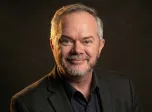
Dave Saunders is the founder of Base Reality Group and a Fractional CPO for product companies. He was a founder and operator at Galen Robotics, where the surgical-robotics platform earned FDA De Novo authorization in 2023, and he managed a 35-patent portfolio licensed from Johns Hopkins. He wrote Founders Who Finish and publishes The Build. More about Dave →