
When a hardware company raises a number this big, the coverage treats the raise itself as the milestone. I read it the other way around. Last week the Munich company Proxima Fusion announced a €411 million round, about $468 million, at a €2.4 billion valuation, the largest private fusion investment ever recorded in Europe, with Google and the German utility RWE among the strategic backers. That is real validation of a serious company. It is also a clock. The money does not buy fusion. It buys the one demonstrator that still has to prove fusion is possible, and it restarts the countdown on everything the company just promised the people who wrote the checks.
What €411 million actually buys
Proxima is a stellarator company, the first spin-out from the Max Planck Institute for Plasma Physics, built on the Wendelstein 7-X research program. The round, led by XTX Ventures and East X Ventures, funds a machine called Alpha, a net-energy demonstrator to be built near Munich and targeted for the early 2030s. Alpha is the bridge. Behind it sits Stellaris, which the company calls the world’s first commercial stellarator power plant, planned for later in the decade, with RWE lining up to host it on the site of a retired fission plant in Bavaria. In under three years Proxima has now raised more than €650 million, including €95 million in public grants, and this round alone cleared its goal of matching Bavaria’s €400 million public commitment.
Read that timeline again as a founder, not a fan. The €411 million funds one demonstrator whose whole job is to show net energy, which is a physics result. The commercial plant that actually sells electricity is a separate machine, years later, and whether it wins turns on a different question altogether.
Money is runway, not a moat
A raise is not a moat. It is runway, a clock ticking against the milestones you promised investors, and the size of the headline tells you how loud the countdown is, not how strong the company is. The bigger the number, the higher the bar you have set for the round after this one. So when I see a mega-raise I do not cheer the banked figure. I ask what the money has to buy to matter, and then I watch what the company builds, not what it banked.
For a fusion company the money has to buy answers to two questions, and the raise is neither. Can the physics that works in a demonstrator survive at plant scale. And when it does, will the delivered cost per kilowatt-hour beat what the grid can already buy. That second question is the one founders in every capital-heavy category underrate. Net energy in a demonstrator is a milestone. A competitive price on the grid is the product. The economics are not a slide you bolt on after the science works. They are the thing you are actually selling.
The move if you build capital-heavy hardware
If you build in a capital-heavy category, climate and energy hardware, advanced materials, anything where the first unit costs a fortune and payback is years out, the pull after a big round is to treat the capital as proof. It is closer to the opposite. A large round buys you the right to attempt the hard part on a deadline, and it raises the bar you must clear to raise again. Strategic investors sharpen that even more. Google and RWE are not only money, they are a possible first customer and a build partner, which is an asset and a dependency at the same time. Plan for both.
Dave’s take
I want Proxima to win and I hope the science lands. But I have watched enough big numbers to know the raise is the easy part to celebrate and the hard part to earn out. The founders who make rounds like this pay off are the ones who treat the capital as a countdown rather than a trophy, and who keep the cost question in front of them the whole way, so that the day the physics works they already know it can be sold at a price the grid will pay. Watch what they build with the €411 million. That is the number that will end up mattering.
From Dave’s video library
Dave on why hitting a giant valuation is not the same as building something real, and why fabricated value, not company size, is the thing worth watching.
I’m here to help you scale.
Work With DavePrefer a smaller first step? Book a $500 one-hour working session →
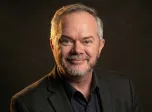
Dave Saunders is the founder of Base Reality Group and a Fractional CPO for product companies. He was a founder and operator at Galen Robotics, where the surgical-robotics platform earned FDA De Novo authorization in 2023, and he managed a 35-patent portfolio licensed from Johns Hopkins. He wrote Founders Who Finish and publishes The Build. More about Dave →