
Harel Gadot is not trying to build a better robot than Intuitive Surgical, and that is the smartest thing about Microbot Medical. The company’s Liberty system, cleared by the FDA in September 2025 to steer guidewires and catheters through the peripheral vasculature, is a fully disposable, single-use surgical robot. You use it once and throw the whole thing away. Gadot told Medical Design and Outsourcing that he wants to strip out the barriers to telesurgery so a future version can treat stroke patients remotely. Most of the coverage frames this as a technology race, a question of who gets the best robot to the brain first. I read it as a manufacturing bet, which is a much harder thing to win.
What Microbot actually built
Liberty is not a shrunken da Vinci. It is a robotic drive unit, a wireless controller, and an arm that mounts near the patient’s bedside, and because every unit is single-use, it shows up sterile and ready to run. Gadot’s pitch is that the physician walks in and starts, without the setup a fixed capital robot demands. In stroke, where his own line is that time is brain, minutes are the product. The system is cleared today for peripheral work, not the neurovascular procedures a stroke needs, but the direction is not subtle. Microbot is calling Liberty the first fully single-use, remotely operated endovascular robot, which is another way of saying it is trying to create a category rather than win an argument against an incumbent. That instinct is right. The moment a young surgical robot lines up against the installed base on the incumbent’s terms, on price and features, against a capital budget the big player already owns, it loses. Claiming a slot the incumbent does not occupy is the only move that tends to work.
The bet is the cost curve, not the robot
The disposable design is where it gets both clever and risky. A conventional surgical robot earns the way a printer does. You place the console, then sell the consumables and the service contract for a decade. Microbot has walked away from that model. There is no console to install and no capital line for a hospital to defend. The entire promise, no capital purchase, near-zero setup, and reach into a rural hospital that could never house a fixed system, rests on a single fact being true: that a robot you discard after every case can be built cheaply enough to price per procedure and still leave a margin. That is not a clinical question, and it is not a regulatory one. It is a question of bill of materials, suppliers, and volume, and it is the whole company. If the disposable cost does not fall as case volume rises, the barrier Microbot removed at the front door comes back as a per-procedure price the hospital will not sign off on.
Which founders should read this closely
This reaches past robotics. Any hard-tech founder whose product is consumed or replaced with each use is making the same wager. The diagnostics company whose margin lives inside a single-use cartridge. The drug-delivery startup whose wearable is thrown away after one dose. For all of them the manufacturing plan is the business plan. I have been on the wrong side of this. Years ago I worked on a surgical robot built for a field no other robot served, on purpose, so we would not go head to head with da Vinci. The catch was that those procedures did not carry the big reimbursement, so our economics had to come in low just to function. The opening we found in the market was open partly because the money there was thin. Picking an underserved category does not spare you the math. It usually makes the math worse, because the space is empty precisely where the economics have not closed.
Dave’s take
Microbot made the right positioning call and then signed up for the hardest possible way to back it. Defining a new category is the easy sentence in a press release. Building a robot cheap enough to throw away, at a price a stroke center will actually pay, at national volume, is a years-long grind through design for manufacture, suppliers, and yield, and no FDA clearance shortcuts any of it. For a disposable device, that cost curve is the moat, and it is the number I would be watching long before the first neurovascular case.
From Dave’s video library
Dave walks through a four-question filter for cutting a pile of startup ideas down to the one worth building, the same focus that lets a small robot own a single category instead of chasing every procedure.
I’m here to help you scale.
Work With DavePrefer a smaller first step? Book a $500 one-hour working session →
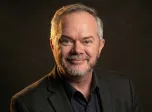
Dave Saunders is the founder of Base Reality Group and a Fractional CPO for product companies. He was a founder and operator at Galen Robotics, where the surgical-robotics platform earned FDA De Novo authorization in 2023, and he managed a 35-patent portfolio licensed from Johns Hopkins. He wrote Founders Who Finish and publishes The Build. More about Dave →