
Cepheid will show the third generation of its GeneXpert system at the ADLM meeting on July 28, and the most disciplined thing about it is what the company left alone. The new instrument is designed to run Cepheid’s existing menu of FDA-cleared tests, in the workflows labs already use, from the day it ships. The touchscreen and rebuilt software are real, but the harder engineering call was refusing to break the installed base. When you already own the machines on the bench, the product you are defending is the habit around them.
Cepheid, part of Danaher, is not a startup making a bet. It is the incumbent defending one. James Green, the company’s chief technology officer, framed the redesign around keeping the simplicity and ease of use customers expect while supporting more sophisticated assays. Connie Savor, the chief medical officer, described the goal as pulling molecular tests that are scattered across separate instruments onto one system. Both statements point the same way: add capability without asking the customer to change how they work.
The design brief was mostly subtraction
Read the launch materials and the restraint shows up everywhere. The third-generation system keeps true random-access testing, so a tech can run a sample the moment it arrives instead of waiting to batch it. It keeps the existing Xpert test menu, so labs are not re-validating a new menu to go live. The first configuration out the door is a compact four-module unit that Cepheid expects to start shipping to US customers in the coming months, with higher-capacity and Infinity versions still in development. The forward-looking parts, high-plex panels, faster time to result, and sample-to-answer workflows that may eventually reach next-generation sequencing, are described as designed-for, not shipping.
There is an operating reason to build this way. In a clinical lab, the workflow is muscle memory. The techs have run these cartridges thousands of times, and the lab has a validated, documented process wrapped around every assay. The moment a new instrument makes them relearn that or re-validate a menu, you have handed them a problem instead of a solution. Friction is not a rough edge you sand down later. It is the thing that makes a good product get quietly set aside for the one already on the bench.
The menu is the moat, not the machine
This is also the part that should worry a diagnostics startup. Cepheid says GeneXpert is the largest installed base of any single sample-to-answer PCR system, and whether or not you accept the exact ranking, the shape of the advantage is clear. A challenger is not competing with the box. It is competing with a cleared test menu that took years to assemble, a fleet of instruments already paid for, and a lab staff that would rather not change anything. You do not out-feature that.
So do not try. The losing move is to line up against GeneXpert on menu breadth or a spec sheet, which is a budget fight the incumbent already won. The better move is to find the assay or setting the big platform serves poorly, own it, and refuse the direct comparison. That might be a near-patient workflow it cannot reach, or a decentralized site it was never built for. Pick the ground where being different is the point, and build there instead of climbing the incumbent’s hill.
Dave's take
The interesting product decisions in an installed-base business are almost always subtractive, and I would rather see a team guard the existing menu and workflow than chase a longer spec sheet, because what the customer bought in the first place was continuity. When a founder is going up against a platform like this, my first move is to take the head-to-head comparison off the table. The box was never the point. The opening is the work the installed base cannot do, and that is the only conversation worth having.
From Dave’s video library
Dave walks through five questions that surface why customers actually leave, a useful lens when the thing keeping them is habit rather than features.
I’m here to help you scale.
Work With DavePrefer a smaller first step? Book a $500 one-hour working session →
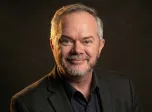
Dave Saunders is the founder of Base Reality Group and a Fractional CPO for product companies. He was a founder and operator at Galen Robotics, where the surgical-robotics platform earned FDA De Novo authorization in 2023, and he managed a 35-patent portfolio licensed from Johns Hopkins. He wrote Founders Who Finish and publishes The Build. More about Dave →