
Somewhere in Endocision’s development, someone decided to throw out the console. Not shrink it, not make it cheaper to build, remove it entirely. That is the decision I would want to understand first, because it is the one that decides whether this company has a business. Last week the Montreal company announced the first human cases of its Cryocision system, a flexible cryocatheter for lung procedures that cleared the FDA and Health Canada and then treated its first patients in Quebec hospitals. The clinical firsts are real. But the move that matters commercially is the one buried in the product description: there is no capital equipment to buy. Cut the console and you have not built a smaller device, you have changed who is allowed to buy it.
What cutting the console actually does
The Cryocision platform replaces the electromechanical console that legacy flexible cryo systems depend on with a miniaturized refrigerant dispenser. It is hand-held or clipped to the handle of a standard bronchoscope, and it pushes pressurized CO2 down the scope’s working channel to cool the tip of a single-use 5 French catheter. One operator, fast setup, nothing to sterilize and reload. The capital equipment that used to gate the whole category is simply gone.
A capital console is not only an expensive line item, it is a different purchase entirely. It goes to a value-analysis committee, competes against every other capital request in the hospital, and can sit in a budget cycle for a year. A wholly single-use device is an operating cost, the kind a department can often approve without the capital gauntlet. Endocision’s own chief medical officer said the point out loud, that the system is meant to reach centers that could not afford the capital expenditure. Cut the console and you have not only lowered the price, you have changed the buyer and the path to yes.
I learned how unforgiving that math is the hard way. On a surgical robot I worked on, we aimed at a niche no other system served, and the catch was that the underserved procedures were the low-reimbursement ones, so the economics had to close on day one or we would never see a second hospital.
The disposable is the business model, and that cuts both ways
Removing the console does not remove the economics, it relocates them. The razor-and-blade shape is proven, da Vinci runs on it, but it moves the burden onto every single procedure. Each case now has to carry its own margin, the per-use cost has to stay low enough that a cryobiopsy pencils out against a needle or forceps biopsy, and the reliability has to hold up thousands of times with no console to fall back on. The upside is a recurring revenue path that grows with adoption instead of a one-time box sale. The risk is that a thin per-procedure margin, multiplied across the volume you were counting on, is where a disposable business quietly bleeds. That is a spreadsheet you want built before the first launch, not after.
The read if you build capital-heavy hardware
If your product today ships with a console, a cart, a reader, a base station, anything a customer capitalizes, it is worth asking what falls away if you delete it. Sometimes the honest answer is nothing, the capital equipment is the product and the disposables are the accessory. But when you can push the intelligence into a single-use tip and let the customer bring the platform they already own, the standard bronchoscope here, you change the sale from a capital fight to an operating decision. This matters most to founders in interventional and diagnostic device categories, where a large installed base of general-purpose scopes and platforms is already sitting in the rooms you want to enter. The device that clips onto what is already there has a shorter path to the first yes than the device that asks the hospital to buy a new box.
Dave’s take
I like this launch because the hard decision is visible in the design. Somebody was willing to give up the control and margin of owning the console in exchange for a device a hospital can actually say yes to. That is a product-strategy call, made early, that most engineering teams never reach because they fall in love with the platform. The clinical firsts will get the headlines. The console they chose not to build is the part I would study.
From Dave’s video library
Dave on why so many founders underprice their own work, and how to set price from the value it delivers rather than what it cost to build.
I’m here to help you scale.
Work With DavePrefer a smaller first step? Book a $500 one-hour working session →
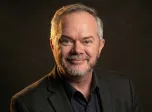
Dave Saunders is the founder of Base Reality Group and a Fractional CPO for product companies. He was a founder and operator at Galen Robotics, where the surgical-robotics platform earned FDA De Novo authorization in 2023, and he managed a 35-patent portfolio licensed from Johns Hopkins. He wrote Founders Who Finish and publishes The Build. More about Dave →