
Years ago I worked on a university tech-transfer project that built a navigated sagittal saw, the tool that shapes bone to seat a knee implant. To make it, we bolted a navigation rig onto a Stryker saw someone had bought off eBay. The clever part was the patent, written around cutting planes when nearly every other bone-shaping robot used a burr. We convinced the patent office it was novel and won a grant. Then the company never pushed it forward, the clock on the patent ran down, and years later a much larger orthopedic company shipped a navigated saw that did the same thing better. I think about that project whenever an orthopedic-robot company raises money. THINK Surgical raised a lot of it this week. On July 14 the Fremont, California company said it had secured a debt facility of up to $65 million from Symbiotic Capital, with $25 million funded now, another $15 million tied to milestones, and up to $25 million more at the lender’s discretion. The size of the number will get the attention. The bet it funds is the part worth studying.
What the money is actually funding
THINK sells the TMINI, a hand-held miniature robot for total knee replacement. The differentiator is not the robot’s size. It is that the platform is open. TMINI runs with implant brands from multiple manufacturers, and the company says it is already compatible with roughly 70 percent of the knee-implant market by share. The surgeon chooses the implant and the robot adapts to it. CEO Stuart Simpson framed the facility as the capital that will, in his words, fully finance the company to profitability. That is a more specific claim than most device companies make. Most raise to reach the next milestone. THINK is saying this is the money that gets it to break-even.
Why open is a real weapon against a locked incumbent
The robots that dominate orthopedics today are generally sold as closed systems, matched to the maker’s own implants. Stryker’s Mako is the obvious example. That is lock-in of the coercive kind. Buy the robot and your hospital is steered toward one company’s implant catalog for years, whether or not a given surgeon prefers something else. It holds right up until a surgeon wants an implant the system will not run, and then it is a grievance sitting there waiting for a competitor to relieve it. THINK is aiming straight at that seam. An open platform lets a hospital keep the implants its surgeons already trust and add the robot on top. That is a genuinely smart place to attack, because it turns the incumbent’s lock-in into the reason to switch.
Open is a smart opening move, not the moat
Here is where my saw comes back. A differentiator convinces surgeons. It does not, by itself, keep a competitor out. Open is copyable. Any incumbent that decides the captive-implant model is costing it deals can open its own platform and erase the advantage in a product cycle. What actually holds is the surrounding system, the part a rival cannot clone by copying the box: surgeons trained and comfortable, the workflow built around the robot, service that shows up when something breaks, and the per-case economics that make each procedure pencil out. That is the kind of lock-in nobody resents, the kind you earn by solving the problem so completely that leaving makes no sense. The da Vinci has it, which is why a technically equal rival still cannot pry those operating rooms loose. My saw project had a real differentiator and nothing durable built behind it, so when the patent clock ran out the window simply closed on someone else’s better version. A debt facility, even one meant to reach profitability, buys the time to build that second advantage. It is not the advantage.
Dave’s take
In orthopedic robots the box is the copyable part, and THINK picked a smart place to fight, because open attacks exactly the lock-in that makes hospitals resent the incumbents. But the company’s own words point at the real work. Financing to profitability means the next few years have to go into the things a competitor cannot clone: surgeon habit, workflow, service, and case economics. I learned the price of skipping that step on a saw a bigger company eventually shipped better. The money buys the window. What THINK builds inside it decides whether open was a strategy or just a feature.
From Dave’s video library
Dave on separating real demand from polite encouragement, and the one kind of proof that tells you a market actually wants what you are building.
I’m here to help you scale.
Work With DavePrefer a smaller first step? Book a $500 one-hour working session →
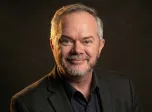
Dave Saunders is the founder of Base Reality Group and a Fractional CPO for product companies. He was a founder and operator at Galen Robotics, where the surgical-robotics platform earned FDA De Novo authorization in 2023, and he managed a 35-patent portfolio licensed from Johns Hopkins. He wrote Founders Who Finish and publishes The Build. More about Dave →