
Axon is becoming Skydio's exclusive public-safety distributor in the United States and Canada, a role Skydio's chief executive, Adam Bry, welcomed as deepening the companies' partnership. Police and fire agencies in both countries will buy Skydio drones through Axon. In the same deal, Axon is putting $1.2 billion into Skydio in cash and Axon stock, which takes its fully diluted stake to 37%. For a robotics, device or defense founder offered a smaller version of this pairing, the distribution terms deserve more of the negotiation than the valuation does.
Who holds the customer
Under an exclusive channel, the agency's purchase order goes to the distributor. That company hears the complaints, learns what the agency wants next, and gets the call when the budget cycle opens again. Skydio has more than 1,500 public-safety customers, according to The Robot Report, and expects about $1 billion in bookings this fiscal year, according to Axon's shareholder letter. Once the deal closes, which the companies expect across the fourth quarter of 2026 and the first quarter of 2027, Skydio's new public-safety customers in both countries come through Axon.
Handing Axon the order can still be the right call for Skydio. Axon already sells these agencies their dispatch, evidence and airspace-security software, and a drone that plugs into that stack is an easier purchase than a standalone aircraft. An exclusive channel can cost the maker its direct line to the people who use the product every day, and with it the field feedback that shapes the next one. The public documents don't say how much of that line Skydio keeps.
Who sets the margin
The shareholder letter describes Axon as a direct channel partner that will book the Skydio sales on a net basis, as pure margin. Axon's revenue line will carry its cut of each drone sold, while the full sale price stays out of it. The public documents don't give the size of that cut.
For a founder, the distributor's share is a standing cost on every sale in that segment, and the price the end customer sees isn't yours alone to set anymore. If your unit economics only work at the price you'd charge direct, the channel has to bring enough extra volume to cover the difference.
Who can walk away
The $1.2 billion mixes new money for Skydio with shares Axon buys from existing holders. Once it closes, Skydio's exclusive channel and a 37% owner are the same company, so renegotiating the channel later means negotiating with that owner. The public documents don't say how long the exclusivity runs, what sales Axon has to hit to keep it, or what ends it.
The scope, at least, is narrow. The exclusivity covers public safety in two countries, and Axon's letter says Skydio stays free to build across many industries. A founder can ask for the same shape, a named segment in a named territory, and then for the exit terms the public documents leave out here.
Start with a fixed term that ends unless both sides renew. Add sales minimums that drop the exclusivity if the distributor misses them for a set period. Ask for a clause that reopens the deal if the distributor is bought, and keep the right to hold the contact details of every customer the channel signs. With those in place, you could still reach your own customers the week after the channel stalls.
Dave's take
I price a partner who holds my customers the way I'd price expensive money, because the cost comes out of control and no line on the cap table records it. Skydio went into this with a billion dollars in bookings to bargain with. Most founders offered an exclusive channel by an investor are bargaining with a fraction of that.
From Dave’s video library
Dave covers how a founder with no audience gets the first users through direct conversations, the stage that comes before any channel deal.
I’m here to help you scale.
Work With DavePrefer a smaller first step? Book a $500 one-hour working session →
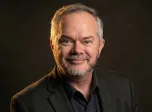
Dave Saunders is the founder of Base Reality Group and a Fractional CPO for product companies. He was a founder and operator at Galen Robotics, where the surgical-robotics platform earned FDA De Novo authorization in 2023, and he managed a 35-patent portfolio licensed from Johns Hopkins. He wrote Founders Who Finish and publishes The Build. More about Dave →