
Olympus’s plant in Shirakawa, Japan, makes the UHI-4, an insufflator that pumps gas into the abdomen during laparoscopic surgery. The plant’s risk management report for the device is dated November 6, 2025. By then the UHI-4 had been through a Class I recall, in 2023. A patient death had also been confirmed. The report still didn’t list air embolism, arrhythmia or patient death among the device’s hazards, and that omission is the first example the FDA gives in the warning letter it issued to Olympus on October 7, 2026.
Olympus had already identified air embolism, arrhythmia and death as UHI-4 hazards, in its complaint investigations and in its health hazard assessments, the internal reviews a manufacturer runs to judge how dangerous a field problem is. None of that reached the risk report.
What the complaint files held
Between November 2020 and October 2022, the Shirakawa plant received 325 complaints about pressure sensor defects and front panel failures on the UHI-4. According to the FDA, Olympus didn’t track whether those complaints were rising or push them into a corrective action. It opened one only after the FDA asked, though it had known about the sensor defects as early as 2018.
One complaint reported a death from gas embolism. A field service engineer had pulled the device’s event log, and the log was in the complaint file. The investigation never looked at it.
At another plant, in Aomori, the risk report for a sphincterotome, a catheter with a cutting wire used in endoscopic procedures on the bile duct, listed the harm from a deformed wire as “delay in treatment.” Medical device reports on the same product described the wire cutting blood vessels. The risk report never picked up that harm.
The FDA’s response so far has come at the border. On October 20 it added five more Olympus models, including enteroscopes and a capsule camera the patient swallows, to an import alert that has been in place since June 2025 and already kept 58 Olympus devices out of the U.S.
The same gap in a ten-person company
A seed-stage company with one device in a pilot keeps the same kinds of records Olympus does: complaints, corrective actions and a risk file, often in the hands of different people. The gap between them opens quietly. Early complaints land in the inbox of whoever sold the unit. A clinical specialist mentions a near miss on a call after a site visit, and an engineer fixes the cause in the next firmware build. Each is a sensible response, and none of them changes the hazard analysis written before first clinical use. A year later the company walks into a submission or a diligence review with a risk file that describes the device as it was before anyone used it.
ISO 14971 already requires a manufacturer to collect information from production and the field and feed it back into risk management. When I run product for a hardware team, I want the mechanics of that written down early: when a complaint describes a harm worse than the one in our risk file, who changes the file, and by when? With ten units in the field, the answer can be a form field and a standing meeting. Add a line to the complaint form asking whether the reported harm is in the risk file at its current severity, and have a “no” open a risk review. Put the risk file’s owner on the complaint distribution. Read the two side by side every month.
Dave’s take
Olympus is trying to rebuild that connection across six sites while under an import alert, and the FDA says it still can’t judge whether the fixes work. A company with one product can build it before the first unit ships, while one person can still read every complaint.
From Dave’s video library
This week's Monday MedTech covers the expanded Olympus import alert, Edwards' FDA approval for PASCAL in the tricuspid valve, and EQT's deal to buy Qiagen.
I’m here to help you scale.
Work With DavePrefer a smaller first step? Book a $500 one-hour working session →
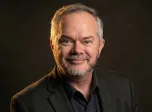
Dave Saunders is the founder of Base Reality Group and a Fractional CPO for product companies. He was a founder and operator at Galen Robotics, where the surgical-robotics platform earned FDA De Novo authorization in 2023, and he managed a 35-patent portfolio licensed from Johns Hopkins. He wrote Founders Who Finish and publishes The Build. More about Dave →