
On October 12, Siemens Healthineers stopped selling the Acuson Juniper and Acuson Maple ultrasound systems, eleven months after the FDA cleared them. The two had cleared on November 13 and 17, 2025. They went out along with the Sequoia and the Redwood, the rest of the Siemens general imaging ultrasound line, and Siemens kept the ultrasound that guides heart procedures. Whether to keep selling a cleared product is a business decision, and Siemens made it while keeping its support promises to the hospitals that already own the machines.
The segment Siemens kept
Siemens will keep selling the Acuson Origin, the P500 and the Freestyle, with dedicated software and catheters, mainly to electrophysiologists and interventional cardiologists. The P500 is an intracardiac echocardiography system, which images the heart from the inside through an ultrasound catheter. Siemens describes itself as the pioneer of modern ICE, with more than 25 years in the field, and in September the FDA cleared a new Siemens catheter, the ACUNAV Luxera 4D.
In cardiology, then, Siemens sells the console, the software and the catheter together to the same team. In general imaging, by its own description, the market is well served by multiple established providers. Juniper and Maple both cleared quickly, through traditional 510(k) reviews with a third-party reviewer, in under six weeks from receipt. A clearance establishes that a device may be marketed for its stated use, and the rest is up to the company. Siemens decided the sales and engineering effort belonged in cardiology, where its release says it sees a significant opportunity for long-term growth.
What Siemens still owes
Siemens says it will support every customer in its installed base through the full life of their systems, honoring its contractual and regulatory obligations, with maintenance, software updates and transducers. A hospital that bought a Sequoia last year has a working machine and a vendor that still answers for it. That probably means years of field service engineers, a stock of probes, a team patching software on a product Siemens no longer sells, and the complaint handling and adverse event reporting that stay with a cleared device while it is in use.
A startup ending a product carries the same obligations on a far smaller budget, and they are easy to put a rough number on. Take a made-up case: 300 units in the field, owners who expect seven years of support, and a fully loaded cost of $1,500 per unit per year for service visits, parts and software builds. That comes to $3.15 million over the tail, spent on a product that brings in no new sales. Set that figure beside what the same engineers and field staff could earn on the product where you win, and name the person who will handle complaints once the product team has moved on.
A yearly review of the line
I'd put this review on a founder's calendar once a year, before a board meeting or a bad quarter forces it. For each product, name the buyer who picks it over the alternatives and the reason they do. Then estimate its support tail. A product with no clear buyer and a tail you can afford is a candidate to stop selling, however recently it cleared.
The same review tells you where the freed money should go. On the day Siemens ended its general ultrasound sales, Steris agreed to pay $2.1 billion at closing for Xodus Medical, maker of the Pink Pad patient positioning system, or about $1.8 billion after the tax benefits Steris expects. Xodus sells consumables an operating room uses up, and consumables were already the faster-growing Steris line, up 9 percent last quarter against 7 percent for the company as a whole. Steris put its money behind the products its hospital customers were already buying more of.
Dave's take
I'd write the end-of-life support plan when a product launches, while the costs are easy to estimate and nobody on the team is defending the product yet. The annual review then has a real number for the cost of stopping, and the decision about each product can rest on what it earns.
From Dave’s video library
Monday MedTech on Siemens Healthineers ending its general ultrasound sales and Steris paying $2.1 billion for Xodus Medical.
I’m here to help you scale.
Work With DavePrefer a smaller first step? Book a $500 one-hour working session →
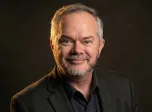
Dave Saunders is the founder of Base Reality Group and a Fractional CPO for product companies. He was a founder and operator at Galen Robotics, where the surgical-robotics platform earned FDA De Novo authorization in 2023, and he managed a 35-patent portfolio licensed from Johns Hopkins. He wrote Founders Who Finish and publishes The Build. More about Dave →