
Two years ago, the team now running Long Wall started building a missile interceptor that no one had ordered. On October 22 the Missile Defense Agency agreed to pay the company $75 million to finish flight testing it, and Long Wall said it will put another $75 million of its own into design and development while the contract runs. The agency's money covers the flight tests. Long Wall's covers the engineering that continues alongside them.
What the agency is buying
Cyclops is a midcourse interceptor, built to hit an enemy missile while it is still outside the atmosphere. Long Wall unveiled it in December 2025 as the first exo-atmospheric interceptor designed from a clean sheet for mass production, and said then that the traditional way of testing had added substantially to the cost of developing interceptors. The award covers completing that flight testing. The agency gets evidence on a candidate it did not fund from the first drawing, and Long Wall gets a test campaign paid for by the customer who will judge the result.
Long Wall's half of the deal has no published end date. The company referred Breaking Defense's question about the contract's length to the agency, which had not answered by press time. So Long Wall has promised $75 million of private spending against a period of performance nobody outside the deal can see. A slipped test campaign leaves that promise the same size, which means a match like this only makes sense for a team whose runway covers the slow version of the schedule.
Why there was something to test
Long Wall could hand the agency a finished candidate because of choices it made inside the design. Its December announcement said the kill vehicle's propulsion and seeker are the subsystems that make or break mass production, and that some design choices leave a team with a handful of possible vendors on the continent. The company built around commercial off-the-shelf parts and 3D printing, and said its existing lines, fully used, could turn out more than a hundred Cyclops rounds a year.
Counting vendors after the design works is the easier order. In a medical device, that order can turn up a single-supplier sensor late in development, when swapping it means running the verification tests again. Long Wall says it spent two years of its own capital designing and testing Cyclops before this award, so its pitch to an agency worried about running out of interceptors could open with a production rate.
What it kept from the rocket business
Long Wall also arrived with its own way to fly those tests. The company used to be ABL Space Systems, a launch company founded in 2017. In November 2024, before it had completed a successful commercial launch, it announced a turn toward military work, and in February 2025 it renamed itself after the walls that connected ancient Athens to its port. The launch business ended there. Its in-house liquid booster, now called RSX, carried over. Long Wall says RSX makes flight tests cheap and routine, and the same rocket can fly as a target for an interceptor to hit. Production lines from the old business are being modified to build Cyclops. The rocket that never completed a commercial launch is now part of what makes the agency's test money go further.
Dave’s take
When a hardware team brings me a cost-share offer, the first thing I ask is which of its expensive decisions it has already paid for. Long Wall had settled its parts list and owned its test rocket before the agency wrote a check. A team that hasn't is asking the match to fund decisions it still has to make, on a clock it doesn't control.
From Dave’s video library
Today's Failure Modes Friday: how a units error in ground software cost NASA the Mars Climate Orbiter.
I’m here to help you scale.
Work With DavePrefer a smaller first step? Book a $500 one-hour working session →
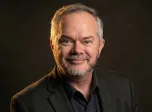
Dave Saunders is the founder of Base Reality Group and a Fractional CPO for product companies. He was a founder and operator at Galen Robotics, where the surgical-robotics platform earned FDA De Novo authorization in 2023, and he managed a 35-patent portfolio licensed from Johns Hopkins. He wrote Founders Who Finish and publishes The Build. More about Dave →