
The FDA has cleared Masimo's Radius VSM, a wearable vital signs monitor, to flag possible atrial fibrillation in hospital patients. The cleared feature tells a clinician when a patient may need an ECG, a decision nurses on a general care floor already make, and it is the second feature Masimo has cleared on the same sensor this year. Masimo's chief medical officer said rhythm trouble on those floors tends to start between routine rounds. The label covers that gap and stops there, and I think the stopping point is the most useful thing in the announcement for a hardware founder.
What the label covers
According to Medical Device Network, the feature is called PPG AFib. PPG, short for photoplethysmography, is the light-based pulse reading a pulse oximeter takes, and the feature runs pattern recognition and AI-based signal analysis on the waveform the Radius VSM already records. Its stated purpose is to help clinicians decide when a patient with an irregular rhythm may need an ECG or telemetry, meaning continuous heart monitoring. An ECG confirms the rhythm. The wearable prompts someone to order one.
A diagnostic claim would pit a fingertip light sensor against the ECG, the test cardiologists already trust. I would expect the FDA to ask for far more evidence. A claim about when to order an ECG concerns one decision a nurse makes during a shift, and Masimo can back it with waveform data its sensor already collects.
One sensor, two clearances this year
In June, Masimo cleared detection of opioid-induced respiratory depression on the same Radius VSM, according to Medical Device Network. Both features run on smartSET, Masimo's pulse-oximetry sensor platform. Each clearance adds a function to hardware a hospital already bought, and each claim is scoped to a question a clinician on a general care floor already asks: is the pain medication suppressing this patient's breathing, and does this rhythm need an ECG?
Those two clearances now belong to Danaher, which closed its roughly $9.9 billion purchase of Masimo in June, Cardiovascular Business reported. Danaher's CEO pitched the deal as a way to strengthen its diagnostics business. I don't know how much the clearance pipeline figured in that price. A sensor whose label keeps growing is worth more to its owner with each new claim, and Danaher now owns one.
What a hardware founder can take from it
On the device programs I've worked on, how we framed the indication decided what evidence we needed and what marketing could say after clearance, and that call belongs to whoever owns the product. Masimo framed both Radius VSM claims the same way. Each is small enough to prove with data the sensor already produces, and each answers a question a floor nurse already faces during a shift.
Founders outside medicine face the same choice with different gatekeepers. Someone building an inspection camera for a production line, or a sensor package for grid transformers, is tempted to promise the biggest outcome the data might someday support, like predicting failures before they happen. Proving that takes years of field history. A claim about the call a plant engineer or a utility crew makes tomorrow morning can be backed by the data the device collects in its first months, and a customer who already has the hardware installed is the easiest one to sell the next claim to.
Dave's take
Masimo's sensor now answers two questions nurses ask on every shift, and I'll be watching for a third. The first claim I push a product team toward is the one a skeptical reviewer can check against data the team already has, because every later claim gets written on top of it.
From Dave’s video library
In this week's Teardown I walk through why Intuitive is cutting da Vinci instrument prices as its US procedure growth slows.
I’m here to help you scale.
Work With DavePrefer a smaller first step? Book a $500 one-hour working session →
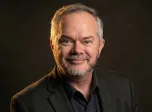
Dave Saunders is the founder of Base Reality Group and a Fractional CPO for product companies. He was a founder and operator at Galen Robotics, where the surgical-robotics platform earned FDA De Novo authorization in 2023, and he managed a 35-patent portfolio licensed from Johns Hopkins. He wrote Founders Who Finish and publishes The Build. More about Dave →