
On September 27, about a mile under the Pacific off Oregon, Endurance Energy's test plant turned volcanic heat into electricity for about 29 seconds. The company's account of that dive, released Monday, includes the well that produced nothing and the two failures that cut the run short. I'd judge Endurance on that account, and on a number it hasn't shown yet: what its power will cost a first customer.
What happened a mile down
Endurance is a Seattle startup that has raised $63 million to draw power from undersea volcanoes, according to Canary Media. Its founder and CEO, Andrew Redd, is a former SpaceX engineer. In September his team spent three weeks at the Axial Seamount, an active submarine volcano roughly 300 miles west of Oregon. They drilled a shallow well with a modified offshore geotechnical drill, lowered their 3-ton test unit, called Adélie, to the seafloor, and had a submarine robot connect the unit to the well.
The well never produced power. The crew moved Adélie to a nearby natural vent, where its turbine made about 60 watt-hours over about 29 seconds. For nearly nine of those seconds the plant generated more electricity than it consumed, and the surplus charged its backup battery. Then the battery's overcurrent protection tripped and stopped the run. Soon after, a power cable failed, and the dive was over.
A record investors can price
Founders Fund led Endurance's $54 million Series A in June, GeekWire reported, and those investors are now paying for a redeployment this winter. Endurance's account tells them what they are paying to fix. The power plant itself, an organic Rankine cycle of the type Canary notes is common on land-based geothermal projects, produced net electricity at the vent. The well, the battery protection and the cable are the open problems, and Redd says the team is rearchitecting core components to get more power over a longer run.
A short video of a spinning turbine would have made a better headline. It would also have left investors guessing about which part stopped the plant. Redd described the company's method as "make it exist, then make it good," and the September write-up gives a plain record of how far the first half got.
How far from 100 kilowatts
When GeekWire covered the Series A, it described Adélie as a 100-kilowatt generator. My own arithmetic puts the September run at an average of roughly 7 kilowatts, less than a tenth of that. Redd told Canary a far larger commercial-scale system might start generating in 2027.
Any founder heading into a first field test can copy the format. Write down what ran, for how long, and each thing that stopped it, in order. A board reading that list can see whether the next test campaign is aimed at the failures that happened.
The buyer's comparison
Emily Pope, a geologist and senior fellow at the Center for Climate and Energy Solutions, told Canary she struggles to see how offshore geothermal pencils out. Working in deep, corrosive seawater is costly. The power has to travel a long way to customers. And remote islands, the obvious early market, could adopt solar and batteries far more easily.
Endurance's first named project tests her argument directly. It is a plan with the Kingdom of Tonga for a 2-megawatt plant that would reduce the country's reliance on imported diesel. Steady output has value on a grid that burns diesel when the sun is down. Endurance will have to show Tonga that this value covers whatever its power costs above solar and storage, including the cost of keeping heavily titanium-built equipment running a mile underwater.
Dave's take
I'd back a founder who reports a 29-second dive this plainly over one with a better video, because the plain version tells me what the winter redeployment has to fix. For a company like Endurance, the physics is the first gate. The second is a price that beats the island's other options, and that one is set on land.
From Dave’s video library
Today's Founder Tip Tuesday: Dave walks through Carta's median Series A, which sold 18 percent of the company for $14.4 million.
I’m here to help you scale.
Work With DavePrefer a smaller first step? Book a $500 one-hour working session →
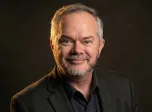
Dave Saunders is the founder of Base Reality Group and a Fractional CPO for product companies. He was a founder and operator at Galen Robotics, where the surgical-robotics platform earned FDA De Novo authorization in 2023, and he managed a 35-patent portfolio licensed from Johns Hopkins. He wrote Founders Who Finish and publishes The Build. More about Dave →