
After years of studying soft-tissue surgical robotics, Stryker announced this week that it will put about $400 million into CMR Surgical as preferred equity. For that money it gets the exclusive right to sell CMR's Versius robots in the United States, a seat on CMR's board for Andy Pierce, who runs Stryker's medsurg and neurotechnology group, and an exclusive option to buy all of CMR later. The sales agency and the option carry the lessons for a founder. Together they give Stryker control over how CMR's robot reaches American hospitals and a first claim on any sale of the company.
Why the sales agency suits Stryker
Versius fits the rooms Stryker's reps already visit. Its arms ride on separate carts, and CMR designed it so a hospital doesn't need a dedicated robotic operating room. The second-generation Versius Plus has FDA 510(k) clearance for gallbladder removal, and CMR has filed for benign gynecological procedures. Pierce wants it in ambulatory surgery centers as well as hospitals, a plan that fits how I think about surgical robots. They create value by letting more surgeons offer a minimally invasive procedure, so a robot that works in existing rooms can reach more patients than one that needs a room built for it. Stryker already sells endoscopy and visualization equipment to those same surgical teams, and Pierce named those product lines as the base this deal builds on.
What CMR traded for the money
In the United States, CMR no longer sells its own robot. Stryker sells it as exclusive agent, and CMR keeps development and sales everywhere else. For a British company with one US-cleared procedure, handing American sales to a company already in those operating rooms is a reasonable trade. It also means Stryker's people will be the ones talking to American surgeons, hearing their complaints and learning which hospitals are about to buy.
Any other company that wants to bid for CMR now has to account for Stryker's exclusive right to buy 100 percent of it, and the announcement doesn't say what the price is or how long Stryker has to decide. If Versius sells well in American hospitals, CMR becomes more valuable, and Stryker is both the company running those sales and the company holding the right to buy. I have no reason to think Stryker would slow a launch to buy cheaper. A founder signing a deal like this still needs the contract to say what each side owes when a faster US launch would raise the price the partner later pays.
What to settle before signing
A robotics or battery startup can land in the same structure: a strategic investor's money, that investor in charge of a sales channel or a supply contract, and a right to buy the company later. The first term to negotiate is the exit from the sales agency. If the option expires and the investor walks away, the contract should say who owns the customer list, the service contracts on installed systems and the sales team's relationships, and how quickly the company can sell in its own market again.
The second is the price mechanism. A fixed price lets the buyer collect most of the value the company builds after signing. A price set by a formula tied to revenue, or by a fresh valuation at exercise, splits that value between buyer and seller. The deadline weighs as much as the price, because a buyer with years to decide can watch the company grow before choosing.
The third is the agent's obligation to sell. Minimum volumes, with the right to end exclusivity if the agent misses them, give the company a remedy when its product sits in a partner's catalog without anyone pushing it.
Dave's take
CMR got $400 million and a sales force already calling on the surgical teams it needs, a good outcome for a company with one US-cleared procedure. I would still have spent the hardest negotiating on the case where Stryker never buys, because an option costs its holder little and binds the company for as long as it stays open.
From Dave’s video library
In today's Failure Modes Friday, Dave walks through how StatStrip glucose meters can file a result to the wrong patient.
I’m here to help you scale.
Work With DavePrefer a smaller first step? Book a $500 one-hour working session →
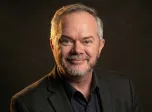
Dave Saunders is the founder of Base Reality Group and a Fractional CPO for product companies. He was a founder and operator at Galen Robotics, where the surgical-robotics platform earned FDA De Novo authorization in 2023, and he managed a 35-patent portfolio licensed from Johns Hopkins. He wrote Founders Who Finish and publishes The Build. More about Dave →