
On October 9, the founder of Valar Atomics announced that his nuclear reactor company had sued one of its earliest backers. Day One Ventures put $1 million into Valar's seed round and $15 million into its Series A. The suit, filed in Delaware, asks a court to rule on Day One's rights in a round that has already closed: a $1 billion Series B, pre-empted by Sequoia, at a $6 billion valuation. Valar's investors voted to change their agreement the day before that close. Day One says Valar had promised that its right to join future rounds could be removed only with Day One's own consent. A founder who expects to raise several more rounds should know, long before the big one, which promises in the financing documents a majority can rewrite and which ones it can't.
Two accounts of the same round
Day One holds under 5% of Valar on a fully diluted basis. A stake that size still qualified it for Major Investor status, which carries a pro-rata right: the right to buy enough of each new round to keep its percentage.
Valar's account, as reported by Startup Fortune and Dealroom, starts after Sequoia pre-empted the Series B. Valar says it wanted one large existing investor to reinvest as a strategic partner. Valar's investor rights agreement had a spring-back clause, which by Valar's description would have restored every Major Investor's pro-rata rights once that strategic allocation was set. To avoid triggering it, Valar asked the other Major Investors to take no allocation in the round. Valar says all of them agreed except Day One, and that the day before the round closed, Major Investors holding a majority of Valar's stock amended the agreement and deleted the spring-back clause.
Day One's general partner published a different account hours later. Day One says it offered the first term sheet and co-led the Series A after Valar had spent weeks on the market without success. It says it waived its pro-rata in a later Series A extension at the company's request, and that Valar agreed in return that Day One's right to join future rounds could not be removed without Day One's consent.
The two accounts also disagree on who was asked to step aside. Day One says four of the six Major Investors joined the Series B without waiving anything. It says it offered to give up most of its own Series B allocation, and that Valar asked it to give up its rights in every future round as well. Dealroom calls this the central factual conflict, and neither account has been tested in court.
Why the clause mattered at $6 billion
Startup Fortune puts Valar's valuation near $2 billion only months before the Series B closed on August 3 at triple that. In a $1 billion round, a pro-rata right on a stake under 5% is a claim on as much as $50 million of the allocation Valar wanted for its strategic partner.
Valar says holders of a majority amended the agreement. Day One says a separate promise put its own right outside any such vote. Dealroom says the court will have to decide whether a majority could validly strip that right.
What a consent right costs later
If Day One's account is right, the consent promise was the price of a waiver in a lean extension, and it came due in the round where Valar's valuation tripled. Valar will need that agreement again. Startup Fortune notes that its business still requires regulatory approval, physical construction and very large amounts of capital, so more rounds are coming, each of them governed by the same document.
With a company that plans to raise again, one of the first things I ask is whether anyone has put every investor right on one page: who holds it, what it lets them do, and what vote changes it. Then we test each right against the round the company hopes to raise next. A promise that can't survive that round is cheapest to renegotiate in a slow quarter and most expensive the day before a close.
Dave's take
I don't know which reading the Delaware court will adopt. If the promise was made, the cheapest moment to settle this was the Series A extension itself, when both sides could have written down which vote, if any, could ever change it.
From Dave’s video library
In this week's Teardown, I compare Katerra's Phoenix factory with Promise Robotics' plan to sign a buyer before it builds one.
I’m here to help you scale.
Work With DavePrefer a smaller first step? Book a $500 one-hour working session →
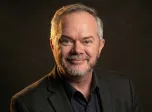
Dave Saunders is the founder of Base Reality Group and a Fractional CPO for product companies. He was a founder and operator at Galen Robotics, where the surgical-robotics platform earned FDA De Novo authorization in 2023, and he managed a 35-patent portfolio licensed from Johns Hopkins. He wrote Founders Who Finish and publishes The Build. More about Dave →