
On Monday InOrbit.AI put its fleet management software, OpenRobOps, on the internet for free. Apache 2.0, no license fee, hosted by the Open Source Robotics Foundation. Inside it is the first working implementation of ISO 21423, the standard that will let an autonomous forklift from one vendor and a floor scrubber from another stop blocking each other in a warehouse aisle. The standard has not finished publication. The code that speaks it is already out.
Standards do not usually arrive in that order. I started my internet career in 1989, and some of that early work was on the standards development for the OSI model. I gave keynote talks about the seven layers at trade shows, back when the industry still assumed OSI would replace TCP/IP.
It did not. Traffic was already moving on TCP/IP while the OSI documents were still under negotiation, and the network went where the working code was. I sold that model from a stage for a few years, and I now think the seven layers were a teaching diagram that the running network never matched. OSI won the textbooks and lost the network.
Who was in the room
ISO 21423 sets the communication and data exchange rules between industrial mobile robots and the fleet managers that direct them. Close to 90 participants from about fifteen countries wrote it inside ISO Technical Committee 299, Working Group 10. The document builds on the MassRobotics interoperability standard and VDA 5050, and it runs on MQTT and JSON, which is the plumbing the people who have to implement it were already using.
Buyers sat in that working group. General Motors backed the effort from the beginning, according to Steven DuMont, who manages advanced automation development there and runs the company's mixed-brand mobile robot fleets around the world. At Procter & Gamble, robotics and machine safety director Mark Lewandowski says his team took part because the industry needed the standard. Those are two of the largest floors in the world where robots from different vendors share space, and both companies helped write the document.
What a free implementation does to a roadmap
OpenRobOps ingests telemetry over networks that drop, tracks robots on a live map, keeps its configuration in Git, and runs from the edge or the cloud. Florian Pestoni founded InOrbit in 2017 and calls the problem it removes the build trap: robot makers spending years writing their own backends and databases when the robot is the product. Steve Cousins ran Willow Garage and now directs the Stanford Robotics Center. He compares the release to what ROS did for robot development. Ten companies ran a multi-vendor orchestration demo at Automate 2026, the first public showing of the standard.
A mobile robot company can put a number on this. How many engineer-months sit in the dashboard, the telemetry pipeline and the multi-robot traffic logic? Writing that backend was defensible while every buyer needed one and nobody was giving it away. It is a different line item once a customer can download a compliant version this afternoon and ask what they are paying for in yours.
General Motors and Procter & Gamble spent years in that working group, and companies that size reference the result in their contracts. Medical devices ran this same sequence with IEC 62304 for the software lifecycle and DICOM for imaging interchange. Both began as documents a buyer could cite, and both ended up as the line in the specification a vendor has to answer.
I have been on the losing side of this one. The document I keynoted was more complete than the one that beat it, and completeness turned out not to be what the industry was adopting. ISO 21423 is showing up with a document and a working implementation at the same time, so I would design to it now and stop watching the publication date.
From Dave’s video library
Dave on what happens to software you put together fast, and why the bill arrives when you go back to change it.
I’m here to help you scale.
Work With DavePrefer a smaller first step? Book a $500 one-hour working session →
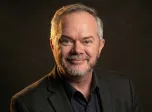
Dave Saunders is the founder of Base Reality Group and a Fractional CPO for product companies. He was a founder and operator at Galen Robotics, where the surgical-robotics platform earned FDA De Novo authorization in 2023, and he managed a 35-patent portfolio licensed from Johns Hopkins. He wrote Founders Who Finish and publishes The Build. More about Dave →