
On August 3 the Pentagon said it wants to triple production of the PAC-3 interceptor and quadruple production of THAAD. The framework agreements sitting behind that announcement buy solid rocket motors, ignition safety devices, THAAD mid-body shells, muzzle covers, and rail car assemblies. No new missile anywhere in it. If you build hardware and you read this as the defense market opening up, I think you have it backwards.
What the Pentagon actually bought
The money is real. Defense News reports a long-term procurement objective of nearly 14,000 Patriot and THAAD interceptors, and Stars and Stripes puts an Army contract with Lockheed Martin at $58 billion over seven years for Patriot production. The urgency is real too. CSIS estimates the United States burned through roughly two-thirds of its pre-war Patriot inventory during the Iran conflict.
But look at where the new agreements land. Northrop Grumman becomes a second source for Patriot solid rocket motors. Production expands for ignition safety devices on the PAC-3. Capacity goes up for THAAD structural parts. Michael Duffey, the under secretary of defense for acquisition and sustainment, described the goal as "robust, dynamic supply chains at every level of the industrial base." Read that as a sentence about redundancy. The Pentagon is not shopping for a better interceptor. It is shopping for a second company that can build the one it already has.
The thing that gets qualified is your process
So here is what a second-source award asks a supplier to prove. That unit four hundred is the same as unit one. That the process making it is documented, validated, and frozen, so a change three tiers down the supply chain does not quietly move a dimension. That the records still hold up in an audit years after the engineer who set up the line has moved on.
None of that is a performance question. A founder who walks into that conversation with a cheaper seeker or a smarter guidance stack is answering something nobody asked on August 3. I spent years on the medtech side building this discipline into design controls, and it travels. Making the first one work is the part founders celebrate. Proving the four hundredth is identical, on paper, to somebody who was never in the building is the part that wins the contract.
The ramp sits on your balance sheet
Now the part that worries me. This surge is priced off a five-month war. Stars and Stripes reports estimates that the United States consumed about two-thirds of its Patriot stockpile and half its THAAD missiles in that window. Build a line against that consumption rate and you are betting the rate holds.
I watched that bet go the other way once. I was in Australia as a guest of Telstra for the opening of Sydney Olympic Park, standing on an ordinary tourist walk, when the guide announced over the microphone that Telstra was going to skip OC-96 fiber and go straight to OC-192. Lucent had been betting on OC-96. I took it back to the group president and was told not to involve myself in technology outside my department. About a year later Lucent began to come apart, in part because of all the OC-96 hardware sitting in the warehouses.
The signal was free. It was announced to tourists over a PA system, and it still could not reach anyone able to act on it. If you take a second-source award and stand up a line to serve it, that line belongs to you when the consumption rate returns to peacetime. Negotiate the ramp so the tooling, the floor space, and the headcount are not stranded on your books the quarter the shooting stops.
Dave's take
The Pentagon is buying reliability this month, and reliability gets bought from people who can document it. So if you are a hard-tech founder eyeing defense revenue, ask whether you can be qualified at volume by an auditor who has never met you and never will. That capability is boring to build, it wins nothing at a demo day, and it is the one getting funded right now.
From Dave’s video library
Dave walks through how to make a call like a capacity bet when the data you want does not exist yet.
I’m here to help you scale.
Work With DavePrefer a smaller first step? Book a $500 one-hour working session →
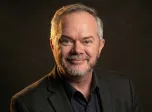
Dave Saunders is the founder of Base Reality Group and a Fractional CPO for product companies. He was a founder and operator at Galen Robotics, where the surgical-robotics platform earned FDA De Novo authorization in 2023, and he managed a 35-patent portfolio licensed from Johns Hopkins. He wrote Founders Who Finish and publishes The Build. More about Dave →