
On July 30 the FDA signed off on a supplement to an investigational device exemption, and the practical effect is that a study in Jacksonville can now enroll ten more patients than it could the week before. That is a small regulatory event. It is also a good look at something founders building platform tools tend to assume, which is that they get to decide what their product is for. They mostly don't.
What the agency actually approved
MMI, short for Medical Microinstruments, makes the Symani Surgical System, a robot built for microsurgery on structures under a millimeter across. It scales the surgeon's hand motion down and filters out tremor. The REMIND study, short for Robotic-Enabled Microsurgical Intervention for Neurodegenerative Disease, uses it to reopen lymphatic drainage in the deep cervical lymph nodes of people with mild to moderate Alzheimer's and confirmed lymphatic abnormalities. The theory, and it is still a theory, is that better drainage clears the neurotoxins researchers believe drive the disease.
The FDA reviewed 30-day safety data from the first patients and approved a supplement to the IDE, per MMI's July 30 release. Enrollment goes from an initial cohort of up to five to the full early feasibility population of fifteen, each followed for twelve months. The first patient was treated at Baptist Health in Jacksonville back in May.
Look at what actually cleared the gate here. Thirty days of safety data on a handful of people bought the expansion to fifteen. MMI's own release says the safety and effectiveness of Symani for lymphatic reconstruction in brain disease has not been established by any regulatory agency, and that sentence is doing real work rather than sitting there as legal decoration. Nobody has shown this helps anyone yet.
The robot didn't change. The question did.
Symani got a De Novo in 2024 covering microsurgery, then a 510(k) in 2025 that added soft tissue dissection, per MedTech Dive. Neither of those says anything about Alzheimer's. Neither anticipated a neurointerventionalist and a plastic surgeon standing over a patient's neck.
That's the whole thing. The machine that showed up in Jacksonville is the same machine MMI has been selling to reconstructive surgeons for free flaps and lymphovenous anastomosis. What changed is that somebody with a hypothesis about lymphatic drainage needed to sew a sub-millimeter vessel to a vein, reliably, in a space with no room to work, and there was exactly one commercially available instrument that could do it.
Which gets at something I believe about robots generally. There is no one robot to rule them all, and the machines that win bounded physical tasks are engineered around the task rather than around a general-purpose ambition. Symani is about as narrow as a surgical robot gets, and that narrowness is why it got picked up. A general-purpose arm would never have been in the conversation.
Who actually defines your market
The commercial math is not subtle. Reconstructive and lymphatic microsurgery is a real business and a narrow one. Alzheimer's is not narrow. If REMIND goes anywhere, and that is a real if at fifteen patients, MMI's addressable market changes by more than any sales hire could deliver.
MMI did not invent that possibility. Two clinicians did.
That is the pattern I look for in a platform tool. The way you find real demand in surgery is to stand in the OR, watch the procedure, and ask what the hardest part is. When the surgeon says this part is awkward and I just work around it, that is your opening, because every surgeon trained the same way hits the same wall. What MMI got here is that same discovery at a distance. Somebody found a problem only their tool could reach, and picked up the phone.
So the question for a founder is not which market do I want. It is whether you are cleared, available and reliable enough to be picked when somebody else finds the problem. A company sitting on a research prototype with no clearance would not have been reachable at all.
The trap on the other side is real, and worth a sentence before I leave it alone. Building a deliberately general tool and waiting for somebody to invent a use for it is not what happened here. Symani was built to do one thing extremely well, and the pull came because of the narrowness, not in spite of it.
I would not read this as MMI buying a lottery ticket on Alzheimer's, and I would not read fifteen patients as proof of anything. What it shows is that the tool was narrow enough and cleared enough to be handed a question its builders never asked. What I would actually watch from here is whether MMI can keep saying no to the story with the bigger market while the reconstructive surgeons paying the bills today are still waiting on their roadmap.
From Dave’s video library
In this one I go through why founders stop doing the unscalable customer work right after their tenth customer, and what it costs them.
I’m here to help you scale.
Work With DavePrefer a smaller first step? Book a $500 one-hour working session →
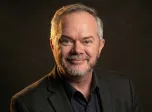
Dave Saunders is the founder of Base Reality Group and a Fractional CPO for product companies. He was a founder and operator at Galen Robotics, where the surgical-robotics platform earned FDA De Novo authorization in 2023, and he managed a 35-patent portfolio licensed from Johns Hopkins. He wrote Founders Who Finish and publishes The Build. More about Dave →