
Founders are trained to chase the tenfold improvement. The device that crossed the FDA finish line this month did something less glamorous and more instructive: it got about fifteen percent faster at a job people are already desperate to do better. On June 3 the FDA cleared the BD BACTEC FXI Culture System, a blood-culture platform that detects bloodstream infections roughly three hours sooner than the generation before it. Three hours sounds like a rounding error until you remember what the clock is measuring.
An incremental number sitting on an urgent problem
The headline figures are modest. Mean time to detection drops from about twenty hours to seventeen, the fifteen percent the announcement leads with. The system loads up to sixty vials at once, a fifty percent jump in capacity, and ships in 480- and 960-vial configurations. BD builds it and Waters is bringing it to the US market. It already cleared in Europe in April and is licensed in Japan. None of that reads like a breakthrough.
The pain underneath it is not modest at all. Sepsis is the textbook case of a problem where every hour counts, and a blood culture is the test standing between a clinician guessing at a broad-spectrum antibiotic and knowing what they are actually treating. Speed there is not a vanity metric. It moves the decision a doctor makes next. A small improvement on a genuinely painful problem is worth more than a spectacular improvement on a problem nobody is losing sleep over.
The mistake I have watched founders make
I have watched a lot of brilliant teams fall in love with their solution instead of someone’s pain, and I have done it myself. The cautionary tale I keep in my pocket is the Magic Link from 1994: real ex-Apple engineers, email and messaging from anywhere thirteen years before the iPhone, a data deal with AT&T, manufacturing by Sony. Technically gorgeous. Nobody wanted it. The vision was there and it was still a fancy science project, because it answered a question users were not yet asking.
The opposite of that is the discovery method I learned in surgical robotics. You watch the procedure and ask what the hardest part is. When the surgeon describes the awkward workaround they have just learned to tolerate, that is your opening, because every surgeon trained the same way is tolerating the same thing. Tolerated workarounds are concentrated pain. The blood-culture lab has its own version: the wait, and the antibiotic chosen blind during it. BD did not win here by inventing a category. They shaved hours off a wait that hospitals were already counting and added capacity for labs already running flat out.
What this means for diagnostics founders
For IVD and diagnostics founders specifically, the lesson is to anchor every roadmap decision to a clinical decision that changes. A faster result that does not change what the clinician does next is a feature. A faster result that lets them stop guessing is a product. Notice the split, too. BD makes the system and Waters carries it to market. Getting cleared and getting distributed are two different problems, and the second one decides whether anyone actually uses what you built.
The read travels past diagnostics. Any hard-tech founder choosing between a bold new architecture and a boring improvement to something people already depend on should weigh the boring option more seriously than instinct allows.
Dave’s take
The flashy demo and the urgent, unglamorous fix compete for the same engineering hours, and founders almost always overweight the demo. I would rather ship a fifteen percent improvement a clinician feels on a Tuesday than a tenfold improvement to a problem no one was bleeding over. Pain is the signal. Find the workaround people have stopped complaining about because they have given up expecting better, and build there.
From Dave’s video library
Dave on the questions that find the pain customers stopped mentioning. BD's three-hour-faster blood culture wins because someone noticed the workaround clinicians had given up complaining about.
I’m here to help you scale.
Work With DavePrefer a smaller first step? Book a $500 one-hour consultation →
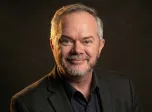
Dave Saunders is the founder of Base Reality Group and a Fractional CPO for product companies. He was a founder and operator at Galen Robotics, where the surgical-robotics platform earned FDA De Novo authorization in 2023, and he managed a 35-patent portfolio licensed from Johns Hopkins. He wrote Founders Who Finish and publishes The Build. More about Dave →