
A founder sent me the Crunchbase headline last week with one line on top: the money is back, raise now. Defense-tech venture funding had already broken its all-time record and we were barely into June. He read it as a green light. I read the same number and saw the opposite for most of the founders I talk to. The record is real. So is the part that never makes the headline. This capital is piling into a small number of companies, and the bar to be one of them has moved into work most hardware founders keep putting off.
What the records actually say
The defense figure is not hype. Crunchbase reported that companies in its military, national security, and law enforcement categories have taken in $14.6 billion in venture funding so far this year, already past the $9.6 billion the whole sector raised in all of 2025, and it happened across roughly 107 rounds in five months. The names doing the lifting are the usual ones: Anduril closed a $5 billion Series H at a $30.5 billion valuation, Shield AI a $2 billion Series G, Saronic a $1.75 billion Series D. Medtech is running warm too, on pace for one of its strongest years since 2021.
Look under the totals, though, and the shape changes. Across med-device and health tech the count of deals has been shrinking while the average check per deal keeps climbing. More dollars going to fewer companies. That is not a rising tide lifting every boat, it is a sorting. The capital that looks abundant in aggregate is getting harder to reach one founder at a time, because each surviving check is bigger and the list of who clears the bar to receive it is getting shorter.
Concentration is not abundance
I say the same thing to every founder who comes to me in the middle of a raise: venture capital is not free, it is expensive money, and you had better know the exact milestone you are buying with it. A concentrating market makes that rule harder to honor, not easier. The post-money valuation you accept this round becomes the bar you have to clear at the next one, and when money stacks into fewer companies at bigger numbers, the distance between the price you take and the traction you can show stretches wider. The down round on the far side gets more likely, not less.
When a founder shows me a billion-dollar raise and a deployment plan that is still mush, the number is not the interesting part. What I want to know is what they are going to do with the cash and what they will have to put on the table at the next round to defend the price they just set. Most of the celebrating I watch skips straight past that question, and the founders skipping it are the ones who walk into the next raise unable to answer it.
What actually unlocks a check now
So what separates the companies getting funded from the ones getting passed over? Less of it is the technology than founders want to believe. Read what device investors now expect on the table by a Series A and it is blunt: a specific FDA pathway, named and defended, 510(k) or De Novo or PMA, sitting next to early reimbursement work, the CPT or HCPCS codes the product would bill under and the budget case for the hospital that has to pay. Not a prototype that runs. A defended route from the prototype to a paying customer.
Change the vertical and the words change, not the shape. A defense founder needs a believable procurement road, not a demo reel. A climate-hardware founder needs an offtake agreement, not a better cell chemistry. The capital is chasing the same thing in each case: proof that someone already did the work of turning a working device into a fundable path to market. That work is product, not engineering and not the pitch. It is the framing of the pathway itself, and it is the piece founders most often defer and then cannot produce when the term sheet conversation finally arrives.
Dave’s take
The 2026 funding records are not telling hardware founders that money got easier. They are telling them money got pickier, and it is sorting on the one thing a working prototype cannot prove on its own: that there is a credible, defended path from the bench to a buyer. I would rather a founder spend this quarter writing their regulatory and reimbursement pathway down in plain language than spend it polishing a deck around a number someone else raised. The check follows the path now. It stopped following the demo a while ago.
From Dave’s video library
Dave on the proof that cannot lie when everyone else will. Record defense-tech funding is concentrating into fewer companies for the same reason: a working prototype proves nothing about the path to a buyer, and investors have stopped pretending otherwise.
I’m here to help you scale.
Work With DavePrefer a smaller first step? Book a $500 one-hour consultation →
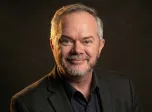
Dave Saunders is the founder of Base Reality Group and a Fractional CPO for product companies. He was a founder and operator at Galen Robotics, where the surgical-robotics platform earned FDA De Novo authorization in 2023, and he managed a 35-patent portfolio licensed from Johns Hopkins. He wrote Founders Who Finish and publishes The Build. More about Dave →