
There is a decision buried in UpDoc’s FDA clearance that matters more to a founder than the milestone everyone is celebrating. The company cleared the first Software as a Medical Device to put a large language model in front of patients. That is a real first: cleared late last year, debuted commercially last month with $18 million in seed funding, and read this week by regulatory lawyers as a new pathway. The reflexive take is that an AI can now manage patient care. What UpDoc actually cleared is far narrower, and the narrowness is why it worked.
What actually cleared
UpDoc’s platform, led by physician-founder Sharif Vakili, handles type 2 diabetes medication management between visits. A patient talks or types to an agent through voice or chat, and the software carries out a treatment plan a clinician has already specified: insulin titration within physician-approved parameters, lab ordering, and the follow-through a busy practice rarely has time for. It is already running at Cleveland Clinic, Allegheny Health Network, and UCSF Health. The seed round drew the American Diabetes Association, Eli Lilly, Mayo Clinic, and a stack of venture firms. This is a serious company with serious backers, and the product is real.
The detail that keeps falling out of the coverage is the one that governs the whole thing. The language model does not decide. It carries out a decision a licensed human already made, inside limits that same human set.
Why a 510(k) and not a De Novo
Here is the move worth showing a founder. A first-of-its-kind LLM device had an easy argument for a De Novo, the pathway you use when nothing like your product exists yet. UpDoc went the other way and cleared a 510(k), the pathway that turns entirely on substantial equivalence. A 510(k) means you are telling the FDA your device is equivalent to something already on the market, doing a recognized job within recognized bounds.
You cannot make that argument while also claiming your device is smarter, faster, or better than what came before. The most expensive word in a 510(k) is “better.” A superiority claim changes what you are asserting, from “treat me as an equivalent tool” into “I am different and superior,” and that invites exactly the harder review a 510(k) is meant to avoid. So the discipline is to frame every difference, including a brand-new language model sitting in the loop, as still equivalent and safely evaluated within the same limits. UpDoc scoped the indication so tightly, one condition, provider-written plans, human-set parameters, that a chatbot talking to a diabetic patient reads to a reviewer as a bounded medication-management tool rather than an autonomous clinician. The scoping was the strategy.
The hype gap works in your favor
There is a wide space between what the headlines say this clearance means and what the label says it means, and that space is useful to any founder being pushed for an AI story. Most of what gets sold as “AI” is machine learning wearing a bigger name, and the FDA’s own records make the point: well over a thousand Software as a Medical Device authorizations already involve machine learning. UpDoc is not the first “AI” medical device by a wide margin. It is the first with a patient-facing language model, which is a genuine and specific advance, and it earned the clearance by describing itself in checkable, bounded terms instead of grand ones.
When an investor asks a hard-tech founder what the AI plan is, the answer that actually funds looks like UpDoc’s, not like a launch post: a bounded task, a real clinician holding the judgment, and an indication tight enough to clear.
Dave’s take
UpDoc’s clearance will get read as the day AI started practicing medicine. I read it the other way around. They got a language model past the FDA precisely by not letting it behave like one, scoping it to carry out a plan a licensed clinician already signed. The teams that win the AI-in-medtech decade will be the ones who can make their software sound modest to a regulator and still solve a real problem. Modesty on the label is a design skill, not a concession.
From Dave’s video library
Dave on why most of what gets sold as AI is rebranded machine learning, using the FDA’s own list of more than a thousand cleared machine-learning devices to make the case.
I’m here to help you scale.
Work With DavePrefer a smaller first step? Book a $500 one-hour working session →
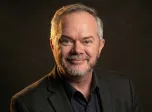
Dave Saunders is the founder of Base Reality Group and a Fractional CPO for product companies. He was a founder and operator at Galen Robotics, where the surgical-robotics platform earned FDA De Novo authorization in 2023, and he managed a 35-patent portfolio licensed from Johns Hopkins. He wrote Founders Who Finish and publishes The Build. More about Dave →