
Picture the pitch a hardware founder wants to make to the FDA: our AI makes the procedure safer. It is the line every investor wants to hear, and it is almost always the wrong thing to file. On March 26, Philips earned FDA 510(k) clearance for EchoNavigator R5.0 with DeviceGuide, an AI tool that tracks a repair device in real time during minimally invasive mitral valve work by fusing live ultrasound and X-ray into one view. The part worth a founder’s attention is not the AI. It is how tightly Philips drew the box around it. The tool is cleared for one procedure, mitral transcatheter edge-to-edge repair, and for use with one device, the Edwards PASCAL Ace system it was co-developed alongside, per Philips. That narrow scope is not a constraint Philips settled for. It is the regulatory strategy.
The Claim You File Is a Product Decision, Not a Regulatory One
The instinct in most companies is to treat the FDA submission as something the regulatory team cleans up after the product is built. The order is backwards. The most consequential choice in the whole program is what you say the device is, in one sentence a reviewer will accept as moderate risk. I learned this at Galen the expensive way. We first framed our surgical platform as a remote-control telemanipulator, substantially equivalent to the da Vinci. The FDA rejected the predicate logic. The device did not change one screw. We reframed it as a stabilizer that improves a surgeon’s access to anatomy at the end of a long instrument, and that sentence carried us to a De Novo authorization. Same hardware, a different claim. The DeviceGuide clearance is that move run on an AI tool. “Track the PASCAL Ace device accurately during this one repair” is a workflow-and-accuracy claim a 510(k) can carry. “Our AI improves valve-repair outcomes” is a clinical claim that buys you a trial.
Narrow Is Faster Because Narrow Is Provable
A patient-outcome framing invites the agency to demand clinical proof, the slowest and most expensive evidence a startup can be handed. A workflow-or-access framing invites engineering and usability evidence, which you control and can generate on your own schedule. Pairing the tool to a single named device does something else founders underrate: it makes the performance claim testable. Does it track the PASCAL Ace accurately, yes or no. That is a question a reviewer can close out, which is exactly why it clears. This is where AI gets dangerous for founders, because the pressure is always to claim the model does more than you can show. Machine learning now sits inside a large and growing share of cleared software devices, and investors keep pushing portfolio companies for a bigger AI story. The regulator is asking for the opposite: a claim narrow enough to falsify. When those two pulls collide, the sober answer wins clearances.
The Indication and the Investor Pitch Are the Same Sentence
Here is the part that bites people later. The claim you make to the FDA and the claim you make to your board are not two stories you get to keep in separate rooms. Once you tell investors the AI delivers a clinical outcome, that language has a way of leaking into the design history file, the labeling, the website copy after launch. A single document that drifts from the cleared indication can sink the submission, or surface afterward as an off-label problem you did not budget for. The current marketing climate makes the discipline harder, because the grand, hard-to-check claim is the house style of the moment, and it tugs founders toward saying more than the evidence supports. Scoping the claim to exactly what you can prove is not timidity. In a regulated category it is the thing that gets you to market at all, and it is a product decision, which means it belongs to whoever owns the product.
Dave’s take
DeviceGuide reads like a story about AI arriving in the cath lab. The lesson underneath it is older than AI. What you say your device is decides what the FDA asks you to prove, and that sentence belongs to the person who owns the product, not the regulatory consultant you hand the file to at the end. Pick the narrowest true claim you can stand behind, then make every document, every slide, and every line of marketing agree with it. That is most of the game, and too many founders decide it by accident.
From Dave’s video library
Dave on what AI really is under the label, using the FDA's own list of cleared machine-learning devices to make the case. Philips just showed the practical move: scope the AI claim narrowly enough and the pathway opens.
I’m here to help you scale.
Work With DavePrefer a smaller first step? Book a $500 one-hour consultation →
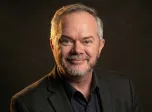
Dave Saunders is the founder of Base Reality Group and a Fractional CPO for product companies. He was a founder and operator at Galen Robotics, where the surgical-robotics platform earned FDA De Novo authorization in 2023, and he managed a 35-patent portfolio licensed from Johns Hopkins. He wrote Founders Who Finish and publishes The Build. More about Dave →