
When my team at Galen Robotics got the signal to pivot to an FDA De Novo, the room read it as a setback. I read it as the agency telling us we sat inside the bounds of acceptable risk, then handing us the pen to write our own standard. That memory came back the week Spectral AI announced, on May 26, that its DeepView system had earned De Novo authorization for assessing burn wounds. DeepView pairs multispectral imaging with an AI model that flags tissue unlikely to heal within 21 days, in about a fifth of a second per image. The headline writes itself: another AI device clears the FDA. The part a hardware founder should sit with is how it got funded, and what the clearance actually unlocks.
The Money Arrived Before the Clearance, and It Came From Washington
Spectral did not finance this device the way a software startup finances a feature. In March the company was awarded another $31.7 million from BARDA, the federal biomedical preparedness authority, on top of the $54.9 million already committed under a contract that can run up to $150 million in total. Spectral put in $9.7 million of its own. The reason the government is paying is not bedside convenience. DeepView is being built as a medical countermeasure for mass-casualty burn incidents, the kind a disaster or attack produces, alongside everyday use in emergency departments, trauma centers, and burn units. That is a real and underused financing path for safety-critical hardware. Non-dilutive capital carried a diagnostic through development and clearance without the founders selling the company off in pieces to do it. But non-dilutive is not the same as unconditional. The money comes attached to a mission, and the mission shapes the product: which indication you chase first, how you validate it, which settings of use you have to prove out. A founder who takes that money should be clear-eyed that the funder's priorities will steer the roadmap as surely as any board seat would.
A De Novo Says the FDA Thinks You Are Moderate Risk, and Hands You the Standard
DeepView went through De Novo because there was no predicate to point at. That is the whole tell, and most founders read it backwards. A De Novo route is not a punishment for being difficult. If the FDA considered the device high risk, it would be sitting in a PMA. Routing you to De Novo is the agency saying you fall inside the envelope of acceptable risk with new controls. And what you win at the end is leverage. When you finish a De Novo, the FDA writes a new regulation describing your device, because none exists yet. At Galen, they asked us what that language should say. We drafted a paragraph, sent it in, and the regulation that entered the books came back almost word for word what we had written. Spectral is now in that position for AI burn assessment. The next company into this category has to be substantially equivalent to them, and Spectral's own next feature becomes a clean comparison against itself. The 340-billion-pixel training set and the sub-second capture are the engineering proof. The lasting advantage is becoming the thing everyone else has to match.
Authorization to Sell Is a Door, Not a Destination
Here is the line in the announcement I would underline for any founder: the De Novo authorizes commercial distribution. That is the right to sell. It is not evidence that anyone will buy at the price and volume your model needs to work. For a diagnostic, the walls after clearance are the hard ones: reimbursement, fitting into a clinician's existing workflow, and standing up a commercial organization that can actually place and support systems in the field. Federal money can carry you to the clearance. It does not carry you across the adoption gap. Spectral, now a public company answerable to a quarterly clock, has to convert an authorization into installed devices and repeat use, and that conversion is where most cleared hardware quietly stalls.
Dave’s take
The reflex on a clearance day is to treat it as the finish line. I have stood in that room, and the honest version is different. A De Novo is the FDA inviting you to define a category and then go prove there is a business inside it. Non-dilutive money got Spectral to the door without selling the company a slice at a time, and that deserves real respect. What happens next is the part no contract pays for: getting clinicians to pick the device up, and getting paid for it, by name.
From Dave’s video library
Dave on why a milestone is not proof and the only proof is a buyer. A De Novo hands you a category, and non-dilutive capital gets you to the door, but the business still has to be proven the same way as everyone else's.
I’m here to help you scale.
Work With DavePrefer a smaller first step? Book a $500 one-hour consultation →
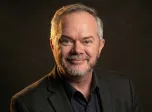
Dave Saunders is the founder of Base Reality Group and a Fractional CPO for product companies. He was a founder and operator at Galen Robotics, where the surgical-robotics platform earned FDA De Novo authorization in 2023, and he managed a 35-patent portfolio licensed from Johns Hopkins. He wrote Founders Who Finish and publishes The Build. More about Dave →