
In 1986 the White House Office of Science and Technology Policy decided which law governs a living thing that somebody built. It picked the Toxic Substances Control Act, passed in 1976 to regulate industrial chemicals. The reasoning was that genomes are made of chemicals, and novel chemicals were already covered. Between 1987 and 2018, researchers filed more than 240 applications under that framework. Almost none were approved.
Niko McCarty published that history this month in Works in Progress. Drones went the same way, landing under aviation authority because aviation authority was what existed, and self-driving cars are there now, measured against vehicle safety standards drafted around the assumption of a driver. In each case the technology arrived before anyone had written a law for it, and a regulator reached for the nearest one already on the books. The 240 applications are what happens next.
Nobody wrote a new law
The 1986 document is called the Coordinated Framework for the Regulation of Biotechnology, and its central finding was that no new statutory authority was needed. Writing in Frontiers in Bioengineering and Biotechnology last November, Leah Buchman and Emma Kovak count four statutes holding the whole field up: the pesticide law, the food and drug law, the chemicals law, and the Plant Protection Act. The framework was updated in 1992 and again in 2017 without anyone revising the logic underneath it. The EPA issued its biotechnology rule in 1997, and a nitrogen-fixing biofertilizer for alfalfa cleared that same year.
Congress never voted on the assignment. It was an interpretation, written by a handful of civil servants, and it has held for forty years.
What the match cost
An engineered enzyme called FAST-PETase breaks down PET plastic in under twenty-four hours, where the natural version needs about six weeks. A modified strain of E. coli detects cadmium at five parts per billion. A Cornell variant of Gluconobacter pulls rare earth metals out of ore 73 percent faster than the unmodified organism. All three work, and none of them is something you can buy, which is where McCarty's title comes from: all the microbes you can't have.
Other countries reached different answers from the same science. Israel approved explosive-sensing microbes in roughly a year. Brazil approved a release of engineered Aedes aegypti that cut local mosquito populations by 80 to 96 percent.
Where the decision is still open
Medical devices are the one category here with a way out, and the microbe applicants had no equivalent. When no existing classification matches, a company can ask the FDA to write a new one instead. I led the De Novo effort at Galen Robotics, where the framing decision came first and did most of the work. The hardware was identical whether we described it as a remote manipulator or as a device that steadies a surgeon's access to anatomy. Only one of those descriptions had a route through. A De Novo that lands means the regulation describing your category is the one your team helped draft, and everyone who follows has to match you. It is pretty easy to be substantially equivalent to yourself.
Writing your own classification is only possible while the question is open. Once a product has been read under a statute a few times, that reading becomes the precedent the next reviewer starts from, and proposing a different one means arguing against the file. So the question I ask early is not what the pathway is. It is who decided that was the pathway, when they decided it, and whether anyone has tested the decision since. For a device that decision is often still live, and a pre-submission meeting is where you find out. For engineered microbes it was settled in 1986, and most categories look more like the microbes than like the devices.
Dave's take
Regulatory strategy starts on the day somebody writes one sentence describing what the product is. That sentence decides which statute a reviewer reaches for, and every document that follows has to live inside it. I would rather spend a month on that sentence than a year answering questions generated by the wrong one.
From Dave’s video library
Dave takes a government move against an AI system apart and separates what the rule actually does from what the coverage said it did.
I’m here to help you scale.
Work With DavePrefer a smaller first step? Book a $500 one-hour working session →
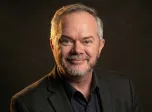
Dave Saunders is the founder of Base Reality Group and a Fractional CPO for product companies. He was a founder and operator at Galen Robotics, where the surgical-robotics platform earned FDA De Novo authorization in 2023, and he managed a 35-patent portfolio licensed from Johns Hopkins. He wrote Founders Who Finish and publishes The Build. More about Dave →