
A continuous glucose sensor produces a number every few minutes. What a person pays for is the sentence that comes after the number. On August 11, Abbott and Google announced a multi-year partnership that hands those two jobs to two different companies. Abbott took the first one.
What each company took
Abbott's Lingo is an over-the-counter sensor. It launched in the US in 2024, it's for adults 18 and over who don't take insulin, and it isn't intended to diagnose disease. Under the partnership, Lingo readings flow into the Google Health app, where a user sees glucose sitting next to sleep, activity and whatever else Google already collects. Google's AI health coach reads that pile and returns guidance on nutrition, activity, sleep and recovery. The coach is a premium subscription feature. Integrations roll out later this year. Neither company disclosed financial terms.
So Abbott carries the sensor: the manufacturing, the regulatory file, the consumable economics, the box on the shelf. Google carries the app icon, the daily open, the subscription, and the screen where a habit either forms or doesn't. Google Health is built on the $2.1 billion Fitbit acquisition Google closed in 2021, so the other signals were already being collected before glucose showed up.
I have built the innards before
My group built the original Apple Airport at a request from Steve Jobs to Lucent. Lucent owned most of the early Wi-Fi patents and we built the guts. Apple designed the plastic and put its name on the outside. Crack open one of those first flying-saucer Airports and there's a Lucent Orinoco card sitting in it.
No consumer went shopping for a Lucent product. They bought an Apple one. That was a reasonable trade for Lucent in 1999 and I'd take it again. It's also true that Apple later shipped an Airport card of its own, which is how component relationships tend to go. The name on the outside keeps the customer, and the part on the inside is a decision somebody revisits.
The study is the term I'd negotiate over
The two companies also plan what they describe as one of the largest real-world metabolic health studies to date, combining continuous glucose, wearable, lab and survey data. Abbott didn't disclose enrollment. The stated purpose is to inform future AI coaching in Google Health and new Lingo features.
Neither announcement says who ends up owning that data set. That's the term I'd want written down before anything else in the agreement, because a coach trained on years of paired glucose and behavior data keeps its value long after the sensor generation that produced it has been replaced by something cheaper and thinner.
Dexcom aimed the same idea at a different gate
Dexcom, Abbott's main rival in glucose sensing, is taking part in an FDA digital health pilot testing AI-enabled glucose management, with the goal of improving glycemic control. Same underlying idea, opposite direction: put the intelligence inside the regulated product, where it moves slower and can carry a claim.
Abbott put its coaching layer outside the device, in a wellness app that ships this year and can't say it treats anything. Both are defensible. The choice decides what your marketing is allowed to say, who signs off before you change the algorithm, and whether an insurer ever has grounds to pay for the thing.
Where else this shows up
The pattern isn't confined to medtech. It arrives any time a hardware company gets invited into somebody else's app: a battery maker into a fleet operator's dashboard, an industrial sensor company into an OEM's monitoring platform, a diagnostics instrument into a hospital's records system. The partner brings distribution you couldn't buy at any price, and takes the layer where the relationship lives.
Platform dependency is a line item on your cap table that nobody writes down. You never raised it, it never hit your bank account, and you can't renegotiate its terms the way you'd renegotiate with an investor. You pay for it in control instead of equity.
Dave's take
I'd price a deal like this the way I price capital, and I'd ask one question before signing it: if the partner turned hostile tomorrow, could I switch my own business back on without them? Abbott can. It has the sensor, the shelf space and a brand people already trust, and it was selling Lingo before Google showed up. A smaller company signing the same structure usually can't, and the day you're the biggest thing on somebody else's platform is the day it costs the most to find out.
From Dave’s video library
Dave walks through where AI spending returns something you can measure, and where it quietly turns into a meter you keep feeding.
I’m here to help you scale.
Work With DavePrefer a smaller first step? Book a $500 one-hour working session →
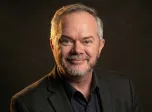
Dave Saunders is the founder of Base Reality Group and a Fractional CPO for product companies. He was a founder and operator at Galen Robotics, where the surgical-robotics platform earned FDA De Novo authorization in 2023, and he managed a 35-patent portfolio licensed from Johns Hopkins. He wrote Founders Who Finish and publishes The Build. More about Dave →